"One ought, every day at least, to hear a little song, read a good poem, see a fine picture
and, if possible, speak a few reasonable words." ~Goethe

~ also, if possible, to dwell in "a house where all's accustomed, ceremonious." ~Yeats

Showing posts sorted by date for query Whitman. Sort by relevance Show all posts

Tuesday, May 14, 2024

Anyplace Away From Here

LEAVING HOME
~ ACCUSTOMED, CEREMONIOUS ~

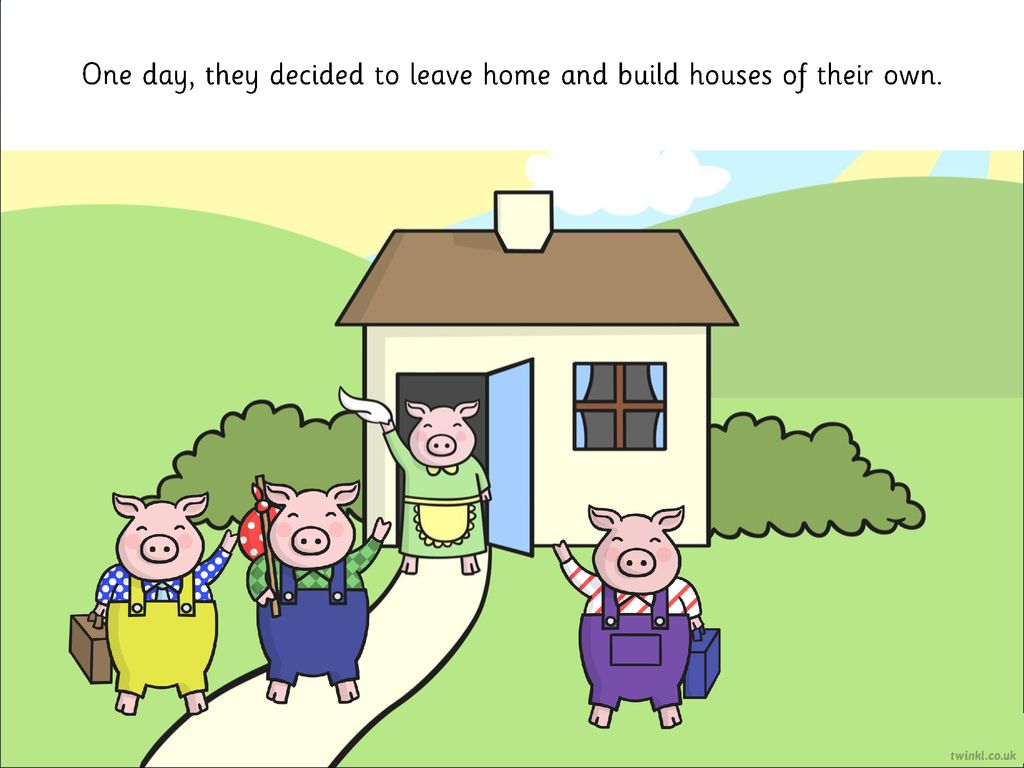
Three Little Pigs ~ Slide Show

“I saw in their eyes something I was to see over and over in every part of the nation -- a burning desire to go, to move, to get under way, anyplace, away from any Here. They spoke quietly of how they wanted to go someday, to move about, free and unanchored, not toward something but away from something. I saw this look and heard this yearning everywhere in every state I visited. Nearly every American hungers to move. . . . nearly all Americans move away, or want to” (10, emphasis added; 99).

~by John Steinbeck
~from Travels With Charley: In Search of America, 1962

~ Oil Field Girls (1940) ~
Jerry Bywaters
(1906 - 1989)

"Impossible, now, to live your life
in a single place, to call it home.
"
Del Marie Rogers
(1936 - 2022)

Home-Free

There’s no rhyme for how high the corn should be*
in September, but I can see it, and I’m telling you

it’s up to my chest, maybe even my neck—
it’s hard to tell from the road—and it’s brown,

and judging by the sibilance when the wind
rubs the husks together, it must feel like paper.

I didn’t see myself living among husks. I didn’t
see myself here, not once I’d left my mother

and father’s house. Not Ohio, not round on the ends,
not high in the middle, not where some creeks

are called cricks. I always thought I would leave,
home-free, and go anywhere: land of silver

mesquite branches, land of dry riverbeds
with stones a horse could spark its hooves on.

Not here, not knee-high by July, not in the heart
of it all, not where some cricks are creeks:

Alum, Big Darby, Blacklick. I didn’t see myself
raising children here, raising as if they could

levitate if we focused our attention. I didn’t
see myself dying in my hometown, not a few

miles from where I was born, not surrounded
by my children, their feet planted on the ground.

I can see them. They’ll say they always knew
where to find me. They’ll say I was always here.


~by Maggie Smith
~from Good Bones, 2017

*Actually there IS a rhyme for this:
"The corn is as high / as an elephant's eye"

Last month I was comparing John Steinbeck with novelist Ann Patchett, so alike in their vision of a picture - perfect landscape. This month, I'm contrasting Steinbeck and poet Maggie Smith, so different in their views of leaving home or staying put. Steinbeck is convinced that searching far afield is the one true path, while Smith presents the magic charm of blooming where planted, "a few miles from where I was born."

For Steinbeck, the urge for new vistas is irresistible. His heart aches for the little neighbor boy who sees him getting ready to drive for weeks across the country, and begs: "take me with you." Steinbeck writes: "Unfortunately, I knew his longing. . . . He had the dream I've had all my life, and there is no cure." Or the young man he meets later on who reads The New Yorker and dreams of going there on his own one day: "'One likes to see for one's self,' he said. I swear he said it" (Travels With Charley, 10 - 11; 172)).

For Smith, on the other hand, a familiar circumference is ultimately a gift to her children:
" . . . They’ll say they always knew
where to find me. They’ll say I was always here
."

Remember, even Yeats (see blog header way up above) hoped for his daughter to be "Rooted in one dear perpetual place. . . . accustomed, ceremonious."

Is it, or is it not "supposed to be any way"? Is one life choice significantly better than or preferable to the other? Or is it 6 of one, 5 of the other -- as in, yes, there is a difference, but just not much, and not always clear which is which. I can't really imagine my life if my parents had abided perpetually close at hand, or if I had, or if Gerry had. The literary connecions suggest many options: staying forever, going away but returning, striking out on your own and learning something new, leaving and never looking back . . .

1. Shakespeare

ROMEO [upon learning of his banishment]:
"There is no world without Verona walls."

FRIAR LAWRENCE:
"Be patient, for the world is broad and wide."

2. Charlotte Bronte
" . . . my experience had been of [the world's] rules and systems; now I remembered that the real world was wide, and that a varied field of hopes and fears, of sensations and excitements, awaited those who had courage to go forth into its expanse, to seek real knowledge of life amidst its perils."(Jane Eyre, Chapter 10)
3. John Denver

" On the eve of his twentyfirst birthday
he set out on his own
He was thirty years and running
when he found his way back home
Riding a storm across the mountains
and an aching in his heart
Said he came to turn the pages
and to make a brand new start . . .

There was something in the city
that he said he couldn't breathe
And there was something in the country
that he said he couldn't leave
. . . "

4. Alan Parsons

"The traveler is always leaving town
He never has the time to turn around
And if the road he's taken isn't leading anywhere
He seems to be completely unaware . . .

The traveler awaits the morning tide
He doesn't know what's on the other side
But something deep inside of him
Keeps telling him to go
He hasn't found a reason to say no
. . . "

5. David Wagoner

" . . . not from the hustings or the barricades
Or the rickety stage . . .
But from another way out . . . Get out of town
."

6. Josephine Tey
"It was typical that Robert's ambition was to go back to the little country town and continue life as it was; while Kevin's was to alter everything that was alterable in the Law and to make as much noise as possible in the doing of it" (The Franchise Affair, 93)
7. Walt Whitman

“Listen! I will be honest with you,
I do not offer the old smooth prizes, but offer rough new prizes,
These are the days that must happen to you:
You shall not heap up what is call’d riches,
You shall scatter with lavish hand all that you earn or achieve,
You but arrive at the city to which you were destin’d, you hardly settle yourself to satisfaction before you are
call’d by an irresistible call to depart,
You shall be treated to the ironical smiles and mockings of those who remain behind you,
What beckonings of love you receive you shall only answer with passionate kisses of parting,
You shall not allow the hold of those who spread their reach’d hands toward you
."
("Song of the Open Road” #11)

Next Fortnightly Post
Tuesday, May 28th
Previous Fortnightly ~ More Steinbeck

Between now and then, read
THE QUOTIDIAN KIT
my shorter, almost daily blog posts
www.dailykitticarriker.blogspot.com

Looking for a good book? Try
KITTI'S LIST
my running list of recent reading
www.kittislist.blogsppot.com

Sunday, April 14, 2024

To the Literary Battle Fronts

INSTILLING DIGNITY, CHANGING STORIES
~ ACCUSTOMED, CEREMONIOUS ~
Mural by
The Graffiti Girls Kenya
Journalist Elizabeth Okwach: "In Kenya, a group of fearless women are finding ways to express themselves by painting graffiti. In the process, these women are challenging stereotypes by visualizing civic issues that are impacting their community.

"Working in Kenya’s capital Nairobi — and major surrounding cities — Graffiti Girls Kenya are painting murals that are gracing the walls of creative hubs and community centers. Even though the murals are bright with color, the themes of these works cover a wide range of societal ills."


Graffiti Girls "sees public art as a crucial venue to address"
the problem of Gender Based Violence.

Artist Nelly Bradbury: “Our messaging through graffiti is bold and clear. When people are passing by they are able to see it and even guide them . . . I believe that public art is changing the social conditions of our community and instilling a deep sense of dignity. It is also changing peoples’ stories that have been ignored or overlooked.
~from OkayAfrica, June 2, 2022

While the artists' collective raises awareness visually, the AMKA writers' collective takes a verbal approach. Director Lydia W. Gaitirira expresss concern that while "written works form a good basis for analyzing perceptions on important social, political, economic and other issues . . . a lot of the creative literature available to young women . . . is designed primarily to entertain . . . [and] often ignores the pertinent issues."

The Fresh Paint literature project offers a corrective to fill that gap. Through prose and poetry, numerous serious writers are telling their stories of personal and political revolution from "the literary battle fronts."

Featured recently on
Kitti's Book List and The Quotidian Kit
~ Volume 1 available on amazon ~
~ Title story available on wordpress ~


This post will focus on a few more selections
from the Fresh Paint collections.
In the following poems, a trio of poets
raise their voices and our consciousness.

1.
The first is a saga of birth, suffering, and as yet unrealized potential, somewhat reminiscent of Walt Whitman's Out of the Cradle Endlessly Rocking, except -- instead of bird, boy, and sea -- the dominant motifs are mother, child, and earth (see also Yeats's "The Second Coming"). This is a long poem; here are the first five stanzas:

The Day the Cradle Gave Birth
~ by Kingwa Kamenchu (in volume 1, 108 - 112)

I know the story of how
She had once been
The cradle of all mankind,
The genesis of all living and breathing,
The birth ground of all empire.
But then in time,
Things had fallen apart

But I've been watching and waiting
And reading the signs
And they all tell me
That the cradle is once again pregnant
Heavy.
Ready to deliver
Any time soon

I see it in the way
Those children inside her stir,
Move, foment, and seethe,
With the pain of being inside
In that watery dark for far too long
A watery dark they have been stuck into
Pegged in, enclosed around, hemmed into,
Trapped down in, shoved upon, condemned to,
Misled, misinformed, and
Hoodwinked is their destiny
For far too long.

They know they must get out now,
Get away from the suffocation and bleakness inside.
These days, you see,
They have their learning; they have seen other worlds
Sniffed the tangy possibility of new vistas
They know who they are
What they want
And they will take no less

I see it in the way
Those children kick,
Jerk about, lash out, and thrust against,
Refuse, demur, dissent
To the condemnation; hit against the inner
enemies as well,
Refuse to be stifled,
After all these years
After numerous struggles
From the war trenches to the academies,
To the literary battle fronts,
They have never given up . . .


The sixth stanza describes Mother Africa's 50 - year pregnancy: "abnormal, surreal, absurd." While the other six continents "Dance, sashay and flourish" and "rule the world," she is restricted by her so - called "condition." In the seventh and eighth stanzas, "Her body has been one big war zone . . . Such a torturous existence" of labor pains, birth pangs, loss of blood.

Then for a brief moment, seven short stanzas, the poet is graced with a vision of hope. Africa has delivered the "home grown . . . fruit of her womb":


Fat, gurgling, cherub-cheeked babies,
Round and luscious, black skins satedly gleaming.
Long gone were the pathetic skin and bone wasted tots
Staring out of wide vacant eyes, flies nibbling at their corners
BBC, CNN, long packd up and trotted off to the
wildebeest great migration
in search of the new exotic; Real African picture. . . .

But I blinked
And when I opened my eyes,
She was still pregnant
Flailing her arms and legs
Rolling her neck from side to side
Moaning in pain and anguish
Like before

And it made me sit and wonder,
What will it take?
For this glorious, blessed cradle,
To give birth once again?


2.
The second poem, like the first, is rich in literary allusion and geography -- the Nile, the streets of Harlem, the "belly of the Sahara . . . a thousand lands." Jallow writes with hope that the world is wide and scorn may be supplanted by song. However, many wrongs remain to redress:

From Shame and Fantasy I Rise
~ by Maimouna Jallow (in Volume 2, 26 - 27)

I too, I dance and I rise
With diamonds at the meeting between my thighs,
Reclaimed the names that you gave me,
And found in them some things that might surprise.

Too many details remained buried under the cloak of the past,
Even if slavery never did lay its hands on my brown skin.
Shame and fantasy reduced my tribe to just half of a caste
Only the walls murmuring whispers of the original sin.

You called me Zero Point Five,
Mathematically drawing a decimal into my existence,
As though in those numbers did not lie
Thousands of years of resistance.

You called me IN-FER-TILE,
Supported by false tales of scientific evolution.
But I flow through man-made boundaries, a child of the NILE,
And my name is written in stone, engraved in the memory of revolution.

Now, just like then, Mule-atta dances off your tongue,
Insult camouflaged by exoticism,
An eroticism splattered on big screens uncensored.
Darwinism dons past colonialism and has just met commercialism.

But under the glow of Harlem streetlights, I too was reborn.
Invoked my sisters of the cowrie crowns,
We rose and danced away your scorn.
Cleaned away the bruises and beneath found mud brown.

And from the belly of the Sahara, we prayed to Orishas.
Baptised ourselves: half of a yellow sun, half of a full moon.
Journeyed a thousand lands learning the wisdom of philosophers
And found that God put a prayer and song in our mouths too.


3.
The third poem personifies and addresses Nairobi directly. The poet calls on the city to account for an unfair history and provide for an equitable future. All three poems share themes of revolution and rebirth. All three ask the reader to question the power of location and the significance of placenames. What will it take? Are you that place?

Are you that place?
~ by Nebila Abdulmelik (in Volume 2, 7)

Are you that concrete jungle
Crumbling under the weight of
Manoeuvring, manipulative matatus
Where passengers are shuka'd at whim?
Are you where darkness whispers sweet lullabies
Or where lights play dirty tricks
Where money is mobile
And glass ceilings tower as high as KICC?
Where freedom is plastered on bus stops
And injustice deeply rooted
Into territorial boundaries
Where few attest their tribe is indeed Kenyan
Where Tusker runs like maji
Where unga is revolutionised
And revolutions are most definitely not televised
Where radios relentlessly relay well kept secrets
Where the rain commands the city
And payday drives traffic
Where the likes of Kibera & Sinai make way
For the likes of Karen & Spring Valley?
Are you the capital of thieves and robbers
Or a megapolis of IT geeks, business gurus and self-made men
Where every pocket is packed with dreams
But not every dream packs pockets
Tell me, Nairobi, are you that place?
Tumutumu Mission Station,
Kenya, ca.1910-1930
,
about 2 hours north of Nairobi

***************

Tumutumu Presbytery,
a few decades later.
My friend Mumbi says:
"This is not what it looked like
when I was baptized there at age 12."

Next Fortnightly Post
Sunday, April 28th

Between now and then, read
THE QUOTIDIAN KIT
my shorter, almost daily blog posts
www.dailykitticarriker.blogspot.com

Looking for a good book? Try
KITTI'S LIST
my running list of recent reading
www.kittislist.blogsppot.com

Wednesday, February 14, 2024

Classic Cinema, 1924 - 1945

KEYWORDS ARE YOUR FRIEND
~ ACCUSTOMED, CEREMONIOUS ~
New York Movie (1939)
Edward Hopper (1882 - 1967)

This post serves as a memory prompt and a keyword search for the growing list of movie classics that Gerry and I have been watching recently. Not to be lazy, but my goal here is modest, no reviews -- just a list of titles and stars.

It turns out that we were watching so many old-time classics that we couldn't keep them all straight in our heads. Thus, I have compiled these lists in an attempt to prevent all of our recent viewing from merging into one huge indiscernible dramatic mishmash.

Here are the movies we've been watching, loosely organized by year, with a few cross references and connections of interest thrown in for good measure.

For the specific day - month - year of every release,
try this website: The Numbers

1924 Battleship Potemkin

1927 Metropolis

1930 Anna Christie ~ Greta Garbo

1931 Susan Lenox ~ Greta Garbo & Clark Gable

1933 Baby Face ~ Barbara Stanwyck, John Wayne

1933 Duck Soup ~ Marx Brothers: Chico, Groucho, Harpo, Zeppo


1934 The Thin Man ~ William Powell, Myrna Loy, Maureen O'Sullivan

1934 The Barretts of Wimpole Street ~ Norma Shearer & Frederic March & Charles Laughton & Maureen O'Sullivan

1934 Babes in Toyland ~ Laurel & Hardy
[see also 1998 The Impostors ~ a tribute of sorts to L & H with Stanley Tucci, Oliver Platt, Alfred Molina, Tony Shalhoub, Steve Buscemi, Billy Connolly]

1934 It Happened One Night ~ Claudette Colbert & Clark Gable

1934 Imitation of Life ~ Claudette Colbert
[see also 1959 Lana Turner]

1934 Of Human Bondage ~ Bette Davis & Leslie Howard


1935 Top Hat ~ Fred Astaire & Ginger Rogers

1935 The 39 Steps ~ Robert Donat and Madeleine Carroll

1936 Modern Times ~ Charlie Chaplin & Paulette Goddard


1938 Jezebel ~ Bette Davis & Henry Fonda

1939 Goodbye, Mr. Chips ~ Robert Donat & Greer Garson
[see also 1969 with Peter O'Toole & Petula Clark]

1939 Mr. Smith Goes to Washington ~ Jean Arthur, James Stewart

1939 Wuthering Heights ~ Merle Oberon, Laurence Olivier and David Niven [and many more versions]

1939 The Women ~ Norma Shearer, Joan Crawford, Rosalind Russell, Paulette Goddard, Joan Fontaine, Lucile Watson, Mary Boland, Florence Nash, Virginia Grey, Marjorie Main, Phyllis Povah, Ruth Hussey, Virginia Weidler, Butterfly McQueen, Theresa Harris, Hedda Hopper

And this isn't even the complete list!
Film scholar Victoria Amador refers to The Women as a
"gay camp classic film . . . an estrogen-soaked comic souffle . . . "
So many women!

1939 ~ Jamaica Inn ~ Charles Laughton, Robert Newton, Maureen O'Hara
[Based on the novel by Daphne du Maurier]

1940 Rebecca ~ Joan Fontaine, Laurence Olivier
[Based on the novel by Daphne du Maurier]

1940 The Shop Around the Corner ~ Jimmy Stewart & Margaret Sullavan

1940 The Great Dictator ~ Charlie Chaplin & Paulette Goddard

1940 His Girl Friday ~ Rosalind Russell & Cary Grant

1940 The Philadelphia Story ~ Katharine Hepburn, Cary Grant, Jimmy Stewart

1940 The Letter ~ Bette Davis, Herbert Marshall, James Stephenson

1940 Remember the Night ~ Barbara Stanwyck & Fred MacMurray.


1941 How Green Was My Valley ~ Walter Pidgeon, Maureen O'Hara, Anna Lee, Donald Crisp, and a young Roddy McDowall

1941 The Lady Eve ~ Barbara Stanwyck & Henry Fonda & Charles Coburn

1941 The Maltese Falcon ~ Humphrey Bogard & Mary Astor
& Jerome Cowan as Miles Archer
-- not the same as Lew Archer / The Name is Archer

1942 Mrs. Miniver ~ Greer Garson & Walter Pidgeon

1942 The Magnificent Ambersons ~ Joseph Cotten, Dolores Costello, Anne Baxter, Tim Holt, Agnes Moorehead

1942 Now, Voyager ~ Bette Davis

The title derives from this brief poem by Walt Whitman:

"The untold want by life and land ne’er granted,
Now voyager sail thou forth to seek and find.
"

Thanks again to Victoria Amaddor, Ph.D.
for additional insights & witty repartee


1943 Casablanca ~ Humphrey Bogart & Ingrid Bergman

1943 Shadow of a Doubt ~ Teresa Wright, Joseph Cotton, Macdonald Carey


1944 Laura ~ Gene Tierney, Clifton Webb, Vincent Price

1944 Arsenic and Old Lace ~ Cary Grant

1944 Double Indemnity ~ Barbara Stanwyck, Fred MacMurray, Edward G. Robinson

1944 Meet Me in St. Louis ~ Judy Garland


1945 Blithe Spirit ~ Rex Harrison, Constance Cummings, Kay Hammond, Margaret Rutherford

1945 Christmas in Connecticut ~ Barbara Stanwyck, Dennis Morgan, Sydney Greenstreet, S.Z. Sakall

1945 Leave Her to Heaven ~ Cornel Wilde & Gene Tierney

1945 The Valley of Decision ~ Gregory Peck & Greer Garson, Jessica Tandy, Lionel Barrymore, Reginald Owen

1945 Mildred Pierce ~ Joan Crawford
[also 2011 ~ Kate Winslet]

For a continuation of the above list:
Classic Cinema, 1946 - 1986


For a list of current suggestions:
Barb Reviews the Movies
We always read and follow - up on these lively suggestions!

For a comprehensive contemporary list:
Joan Tollifson's Recommended Movie List
Thanks to my friend Diane Cox for sharing Joan's master list!


Next Fortnightly Post
Wednesday, February 28th

Between now and then, read
THE QUOTIDIAN KIT
my shorter, almost daily blog posts
www.dailykitticarriker.blogspot.com

Looking for a good book? Try
KITTI'S LIST
my running list of recent reading
www.kittislist.blogsppot.com

Thursday, January 28, 2021

Tony Brown's Last Lines #1 ~ #5

MISSOURI BARN, MISSOURI POETRY
WHERE ALL'S ACCUSTOMED, CEREMONIOUS
Photo credit: Round Barn Series by Jay Beets

My connection with poet and journalist Tony Brown was made years ago as an undergraduate in a couple of classes with fellow English majors at Northeast Missouri State. Following graduation back in 1979, we had neither one seen nor heard mention of the other until Facebook came along and gave anyone who wanted to participate massive highschool / college reunion opportunities with old -- and older -- long forgotten, long remembered classmates.

Tony has not hesitated to share with his readers that the last few years of his life have been informed by his fight with colon cancer. Last month, he mentioned that he was mulling over a notebook of his earlier poems, written between 1980 - 2010, and that he would be posting one each day throughout December as a series of "Last Lines." He not only said "read and enjoy," but also granted me to permission to share them on my blog.

So, I am starting with his first five entries, paired with a series of photographs by yet another creative college friend, Jay Beets. What a blessing to reconnect with these insightful souls who, in sickness or in health, bring light and insight into the lives of friends and stangers alike through their incomparable words and images.

I think you will find Tony's poetry rich in literary illusion
(T. S. Eliot, Walt Whitman) and evocative of rural
American despair and the quest for a broader vision:

#1
Bedford's Daughters

In the spring of their pulchritude
No one would have guessed they
Were sisters.

Karen, who Aunt Edna called
"A goddess, a Greek goddess"
Certainly bore her share
Of pagan charms.

Unsinging, unsmiling in the
Back pew, shifting her perfect
Face and sculpted leanness
Like a bored-out Camaro
Mounted on slicks, burning alcohol
Hell-bound for anyplace
That wasn't Bedford County.

But was preferably a six-bedroom
Faux colonial in Creve Coeur –
A place she'd never heard of –
Fully equipped with six
Kids and a dentist.

Shelly, the oldest – my age –
Smelled like Perry's high pasture,
Which is to say like oak leaves
And naked boards in an old
Wagon, painted blue
By starlight over white,
Stubbled fields, holding
Shadows beneath thin
And moonless clouds.

Sometimes, between crushes
On minor basketball deities
And young factory studs
With dreams of "farming on
My own someday," her heart,
Firmly settled on Old Bedford's
Two-thousand black acres,
She sat by me in church.

Once, during a steamy
July revival, dear
Old Fred preaching
Hard on passion, he
Was against it, she
Held my hand for
Sixteen minutes.

That fall I left for college.

Mom saw her, repeated
Ugly stories of half
Her teeth gone, stocking
Shelves at Place's – meth.

Husbands, babies, liquor,
Beat me, don't take the kids,
Multiple DUIs,
Shock time, squalor – meth.

"And her a Bedford," Mom said.
But Karen, she glowed and gushed,
Was somewhere East, or maybe
Des Moines or Little Rock.

Old Bedford's acres long
Since sold under the
Sheriff's pistol butt.

Perry tore down the house,
Rotted deep from the inside.
Only the land is left,
White stubbled fields
Holding shadows beneath
Thin and moonless clouds.

© Anthony Brown, 2020
#2
Practice
~ Author's note: based one one of Jim Thomas' creative writing class exercises.

Q. She was depressed and drank lots of coffee. It didn't help.

A. She crossed the door of sadness, found beans no cure for madness.

Q. His heart was free like the wind.

A. Turning from bondage toward discovery
He Frenchkissed midnight goodbye, stole her keys,
Drove wild, bright hope beneath the stars.

Q. The dog was homesick and very hungry.

A. Come inside, you wet, smelly thing,
We'll microwave the fatted calf, share supper
And dream of hunting rabbits.

Q. Lightning flashed against the night sky.

A. If you want a real sky-brightener
There's nothing beats out thundring and lightner;
For lightner flashes and thundring booms,
And the cat she hides amongst the brooms.

Q. She saw something in the portrait that made her fear her own death.

A. Her image wrought in tear-stained glass,
A mirror of beauty and the grave.

© Anthony Brown, 2020
#3
Dad's Waltz

When I was three
my father taught school;
we lived in a falling-down house on our farm.

He'd come home from work
in his Yogi Bear hat
give mom a peck and turn on the charm.

My poor brother was there,
I rolled on the floor.
Supper was hot on the kerosene stove.

We had a piano, a rarity then,
And my father would play "Bill Bailey."

On just the black keys, down on his knees,
Bill Bailey, please, come home.

© Anthony Brown, 2020
#4
Prufrock's Blues
(For Bill McKay – both of them)
~ Author's note: This one requires some heavy lifting. Sorry about that. But I always thought it was goodish. I've posted it before, according to Facebook, so some of you may have seen it. Apologies to Tom Eliot -- "Il miglior fabbro".

Let us go then, you and I,
Out where Jimi kissed the sky
And get etherized with Jack D. on the table;
Let us go through certain South Chicago streets,
That smell of Delta catfish joint retreats

Of restless nights in sleazy little clubs
And sawdust stages with chicken-wire cages:
Streets that follow like a five-tone scale
From Satch's horn and Bessie's wail
That lead us to an overwhelming jam ….
Oh, do not ask, “Man, is it cool?”
Just get yo' ax and swing it, fool.

In the room the women come and go
Talking about Fats Domino.

The menthol smoke that rubs its back upon the window-panes,
The big-legged woman whose nuzzles drive you, man, insane
Licks her tongue into the corners of your evening,
As you linger upon the pools that stand in her eyes,
As you fall upon your knees and beg cause she's built like a brick chimney,
Slipping it to her by the terrace; making a sudden leap,
And seeing that she was a gal long and tall,
Who curled up with her head in the kitchen and her feets in the hall.

And indeed there will be time
For a bourbon and a smoke inside the bar,
During the break with your back against the window pane;
There will be time to beat his time
To practice a lick and face the eight-bar troubles that you meet;
There will be time to shoot that .38,
And time for all the tunes in all the clubs by all the bands

That lift and drop a number on those cats;
Time for you and time for me,
And time yet for a hundred improvisations,
And Blind Willie moanin' 'bout John of Revelations,
While crying "It's the most!" and smoking tea.
In the room the women come and go
Wish I had me some jellie roll.

And indeed there will be time
To wonder, "How long has this been goin' on?"
To say that it's just not my cross to bear —
That St. Louie woman with the carnation in her hair —
(They will say: "He loves her like a schoolboy loves his pie.
Like a Kentucky colonel loves his mint-and-rye!)
My blue jeans rich and modest, but asserted by a simple style —
(They will say: "And that's why they call him Shine!")
But do I dare
To walk further on down the road?
In a minute there is time
For the sun to shine on my guitar someday.

For I have known them all already, known them all:
Have known the evenings when the sun goes down,
the when-I-got-up-this-mornings, and the Sunday kind of loves,
I have played slide guitar and coffee spoons;
I know the voices shoutin' with the gospel call
Above the Afro rhythms of a Ledbelly tune.
So how should I presume, without new strings, to stay in tune?

I grow old ... I grow old ...
I shall wear bell bottoms and try to rock and roll.
Do I still have ramblin' on my mind? Does Duane still dare to eat a peach?
I shall wear sharp threads and duck walk on the beach
With 'Retha, Etta and Ella singing each to each.

Oh how I dig it when they sing to me.

I have heard them sailing on the FM waves
Fine blues mammas with their heads thrown back
Soulful, sexy, beautiful, and black.

We have lingered until the house lights have come on
And I believe to my soul now, poor Tony's sinkin' down
So if the river was whiskey, Lord I'd jump in and drown.

© Anthony Brown, 2020
#5
April Elegy
~ Author's note: Really just a fragment. A vaguely (and ominously) political poem written in maybe five minutes just before my 50th birthday while standing in my back yard.

The storm we had this week
beat the blossoms off
the wayward lilac bush
in my neighbor's messy yard.

Until today it stood
scented, purple-crowned
all that Walt could wish
amid this cruelest month
of victory and mourning.

Lilacs, paschal lambs
and thirty years for me
since Lincoln died in verse,
doomed union's star of ages

© Anthony Brown, 2020

MORE TO FOLLOW . . .

Next Fortnightly Post
Sunday, February 14th

Between now and then, read
THE QUOTIDIAN KIT
my shorter, almost daily blog posts
www.dailykitticarriker.blogspot.com

Looking for a good book? Try
KITTI'S LIST
my running list of recent reading
www.kittislist.blogsppot.com

Monday, December 14, 2020

Fencepost of Homestead Past

OLD WOODEN POSTS
ACCUSTOMED, CEREMONIOUS
December 22, 2009 & Christmas 2010

For me, decking the halls includes decking out this lone vintage fencepost from days of yore that stands so loyally, all by itself along our south property line, more than a century old (ca 1900)!

Not only do I honor Christmas in my heart every year ~ as suggested by Charles Dickens ~ but I honor the venerable fencepost for the sake of all the previous homesteaders: those who set the post in the ground so long ago, those who may have met to chat across the fence, and those whose spirits linger still:

Now by the post-and-rail fences, where the old stones thrown there, picked from the fields, have accumulated,

Wild-flowers and vines and weeds come up through the stones, and partly cover them, beyond these I pass . . .

Alone I had thought—yet soon a silent troop gathers around me,

Some walk by my side, and some behind, and some embrace my arms or neck,

They, the spirits of friends, dead or alive, thicker they come, a great crowd, and I in the middle . . .

. . . there I wander with them . . .


Walt Whitman (1819 - 1892)
from Calamus: "There I Wander in Spring"

*************

Christmas 2011 ~ Plaid Flannel
photo: January 19, 2012

December 27, 2012 ~ Candy Stripes

Christmas 2013 ~ Yellow Crystal
photo: January 2, 2014 ~ Snow Was General

Christmas 2014 ~ Red & Silver
photo: January 7, 2015 ~ Staying Alive

Christmas 2016 ~ Cream & Maroon
photo: January 11, 2017

2020 ~ Recycled Tablecloth
Thanks Steven!

2020 Update: First Snowfall!
December 16, 2020

*************

In closing, I share this sad poem for a sad Christmas,
at the close of a long, confusing year:

The Fence

There where the dim past and future mingle
their nebulous hopes and aspirations
there I lie.

There where truth and untruth struggle
in endless and bloody combat
there I lie.
There where time moves forwards and backwards
with not one moment's pause for sighing
there I lie.

There where the body ages relentlessly
and only the feeble mind can wander back
I lie in open-souled amazement.

There where all the opposites arrive
to plague the inner senses, but do not fuse.
I hold my head; and then contrive
to stop the constant motion;
my head goes round and round,
but I have not been drinking;
I feel the buoyant waves; I stagger.

It seems the world has changed her gament.
but it is I who have not crossed the fence.

There where the need for good
and "the doing good" conflict,
there I lie.


Lenrie Peters (1932 – 2009)
*************

Christmas 2015
photo: January 25, 2016
Salvaged Fence Posts from a Nearby Dumpster

P.S.
Christmas 2021 & Summer 2022

Next Fortnightly Post
Monday, December 28th

Between now and then, read
THE QUOTIDIAN KIT  ~ Festive Fencepost
my shorter, almost daily blog posts
www.dailykitticarriker.blogspot.com

Looking for a good book? Try
KITTI'S LIST
my running list of recent reading
www.kittislist.blogspot.com

Tuesday, June 30, 2020

We Hardly Knew Ye

BLUE SKY, END OF JUNE
ACCUSTOMED, CEREMONIOUS

Goodbye June! We hardly knew ye!
Sometimes all you do is take a photograph . . .

or take an old book off the shelf . . .

I bought this silver anthology for myself in May 1975, with money given to me by my Grandfather Paul J. Lindsey for my 18th birthday and my high school graduation. When my mother ~ Paul's daughter ~ died earlier this month, I turned to this book to find the following selections, not because they are included in its contents, but because I knew that for many years they have been tucked in the pages of the chapter on "Death." That's the beauty of an anthology: you can keep adding to it, to your heart's content.


The first yellowed clipping comes from the American spy novelist, Dorothy Gilman (1923 – 2012), best known for the Mrs. Pollifax series:

"Euripides said,
'Who knows but life be that which men call death,
and death what men call life?'
I like this. I picture myself about to die. I don't want to leave, but my time is up, my span completed. I say good-by, clinging a little to those people I've loved and enjoyed. I fill my eyes for a last time with the incredible colors and beauty around me and, as I brace myself and begin the struggle of letting go, I feel the darkness sweep over me. I'm precipitated through a long, dark tunnel into a bright light that blinds me. Hands roughly handle me. I cry out in protest and hear a voice exclaim, 'It's a girl, Mrs. G! You've just given birth to a healthy baby girl.' And I have entered what we call life." ~ from A New Kind of Country
The second clipping is one that I discovered in the attic of my Grandmother M. Adeline Carriker's house in 1974, shortly after the passing of my Grandfather Willard S. Carriker. It was already old and crumbling then, even more so now. This one comes from Mary Mapes Dodge (1831 - 1905), best known as the author of Hans Brinker, or the Silver Skates (1865):

The Two Mysteries

[Occasionally prefaced thus: “In the middle of the room, in its white coffin, lay the dead child, the nephew of the poet. Near it, in a great chair, sat Walt Whitman, surrounded by little ones, and holding a beautiful little girl on his lap. She looked wonderingly at the spectacle of death, and then inquiringly into the old man’s face. ‘You don’t know what it is, do you, my dear?’ said he, and added, ‘We don’t, either.’”]

We know not what it is, dear, this sleep so deep and still;
The folded hands, the awful calm, the cheek so pale and chill;
The lids that will not lift again, though we may call and call;
The strange white solitude of peace that settles over all.

We know not what it means, dear, this desolate heart-pain;
This dread to take our daily way, and walk in it again;
We know not to what other sphere the loved who leave us go,
Nor why we ’re left to wonder still, nor why we do not know.

But this we know: Our loved and dead, if they should come this day—
Should come and ask us, “What is life?” not one of us could say.
Life is a mystery, as deep as ever death can be;
Yet, O, how dear it is to us, this life we live and see!

Then might they say—these vanished ones—and blessèd is the thought,
“So death is sweet to us, beloved! though we may show you nought;
We may not to the quick reveal the mystery of death—
Ye cannot tell us, if ye would, the mystery of breath.”

The child who enters life comes not with knowledge or intent,
So those who enter death must go as little children sent.
Nothing is known. But I believe that God is overhead;
And as life is to the living, so death is to the dead.


And lastly, from my Grandmother M. Rovilla Lindsey's notebooks:

Death Is Nothing At All

Death is nothing at all.
It does not count.
I have only slipped away into the next room.
Nothing has happened.

Everything remains exactly as it was.
I am I, and you are you,
and the old life that we lived so fondly together is untouched, unchanged.
Whatever we were to each other, that we are still.

Call me by the old familiar name.
Speak of me in the easy way which you always used.
[Not in a "Sunday voice"]
Put no difference into your tone.
Wear no forced air of solemnity or sorrow.

Laugh as we always laughed at the little jokes that we enjoyed together.
Play, smile, think of me, pray for me.
Let my name be ever the household word that it always was.
Let it be spoken without an effort, without the ghost of a shadow upon it.

Life means all that it ever meant.
It is the same as it ever was.
There is absolute and unbroken continuity.
What is this death but a negligible accident?

Why should I be out of mind because I am out of sight?
I am but waiting for you, for an interval,
somewhere very near,
just round the corner.

All is well.
Nothing is hurt; nothing is lost.
One brief moment and all will be as it was before.
How we shall laugh at the trouble of parting when we meet again!


Henry Scott Holland (1847 – 1918)

Thanks Gene Ziegler:
"Kitti, I love your ability to find beauty in the
rubble of our crumbling world. Bless you, my child."


Kind words, kindly meant:
"You have always had such an ability to understand
how someone is feeling and to find some piece in
literature, a poem or lyric that actually crystallizes
those feeling better than they understood to begin with.
I can remember thinking that from first I knew you."


"Thanks, Kitti!
Keep those lovely posts coming.
I enjoy what I learn and am
frequently inspired by your posts!"

Next Fortnightly Post
Tuesday, July 14th

Between now and then, read
THE QUOTIDIAN KIT
my shorter, almost daily blog posts
www.dailykitticarriker.blogspot.com

Looking for a good book? Try
KITTI'S LIST
my running list of recent reading
www.kittislist.blogspot.com

Wednesday, August 28, 2019

The Common Air that Bathes the Globe

A BURST OF VIVD PINK NEAR THE DRIVEWAY
ACCUSTOMED, CEREMONIOUS

Thanks to my brother - in - law Tom Burrows
for his beautiful photograph of this late summer blossom!

*********************

With Labor Day Weekend upon us,
who better than our
200 - year - old
American Superhero Walt Whitman
to help us celebrate
"the social and economic achievements of American workers."

As my friend Len once observed:
"Every reminder of Whitman is bracing!"

Whitman is so vast and inclusive, so enthusiastic about life in these United States, that nearly any passage or poem would be appropriate for the occasion of Labor Day. Time after time, he provides comprehensive lists of jobs, professions, States, claiming his identity as "Southerner . . . Northerner . . . Yankee . . . Kentuckian . . . Hoosier . . . Kanadian":

I am . . . A learner with the simplest, a teacher of the thoughtfullest,
A novice beginning yet experient of myriads of seasons,
Of every hue and caste am I, of every rank and religion,
A farmer, mechanic, artist, gentleman, sailor, quaker,
Prisoner, fancy-man, rowdy, lawyer, physician, priest.

I resist any thing better than my own diversity,
Breathe the air but leave plenty after me,
And am not stuck up, and am in my place.


*********************

These are really the thoughts of all . . . in all ages and lands,
they are not original with me,
If they are not yours as much as mine they are nothing, or next to nothing,
If they are not the riddle and the untying of the riddle they are nothing,
If they are not just as close as they are distant they are nothing.

This is the grass that grows wherever the land is and the water is,
This the common air that bathes the globe.

*********************

This is the meal equally set, this the meat for natural hunger,
It is for the wicked just the same as the righteous, I make appointments with all,
I will not have a single person slighted or left away,
The kept-woman, sponger, thief, are hereby invited,
The heavy-lipp'd slave is invited, the venerealee is invited;
There shall be no difference between them and the rest.

This is the press of a bashful hand, this the float and odor of hair,
This the touch of my lips to yours, this the murmur of yearning,
This the far-off depth and height reflecting my own face,
This the thoughtful merge of myself, and the outlet again.

Do you guess I have some intricate purpose?
Well I have, for the Fourth-month showers have,
and the mica on the side of a rock has.

Do you take it I would astonish?
Does the daylight astonish? does the early redstart twittering through the woods?
Do I astonish more than they?

This hour I tell things in confidence,
I might not tell everybody, but I will tell you.


*********************

No sentimentalist, no stander above men and women or apart from them,
No more modest than immodest.

Unscrew the locks from the doors!
Unscrew the doors themselves from their jambs!

Whoever degrades another degrades me,
And whatever is done or said returns at last to me.

Through me the afflatus surging and surging,
through me the cur- rent and index.

I speak the pass-word primeval, I give the sign of democracy,
By God! I will accept nothing which all cannot have
their counterpart of on the same terms.

Through me many long dumb voices,
Voices of the interminable generations of prisoners and slaves,
Voices of the diseas'd and despairing and of thieves and dwarfs,
Voices of cycles of preparation and accretion,
And of the threads that connect the stars . . .


Song of Myself, 16, 17, 19, 24
in Leaves of Grass

*********************

"I wear my hat as I please indoors or out."
Walt Whitman (1819-1892)
photographed on New Year's Eve 1886
by George Collins Cox (1851–1903)
photo restored in 1979 by Adam Cuerden

*********************

"When quoting Whitman," Len advised, "be sure to stand up and read it aloud for the full effect (and for the benefit of others in your vicinity!)."

Len's advice reminded me of a long ago teacher evaluation that I received at Notre Dame, when a student had listed under my "weaknesses": "Likes to read aloud." Haha! But true!

As Len then pointed out, "If people only knew the hilarious comments students often provide on course evaluations, they would want these anthologized. But then the teachers would be tempted to read these aloud."

Whitman was ever one to proclaim, but also one to whisper:

"This hour I tell things in confidence,
I might not tell everybody, but I will tell you
. . .

Failing to fetch me at first keep encouraged,
Missing me one place search another,
I stop somewhere waiting for you."


*********************

Additional examples of Whitman's bracing words:
~ Quotidian ~ Book List ~ Fortnightly ~


SEE YOU IN TWO WEEKS ON MY
Next Fortnightly Post
Saturday, September 14th

Between now and then, read
THE QUOTIDIAN KIT
my shorter, almost daily blog posts
www.dailykitticarriker.blogspot.com

Looking for a good book? Try
KITTI'S LIST
my running list of recent reading
www.kittislist.blogspot.com

Wednesday, August 14, 2019

Given Life by an Intimate Sun

Ponta Delgada, Azores
WHERE ALL'S ACCUSTOMED, CEREMONIOUS

The Sea of Portugal

Oh salt laden sea, how much of your salt
belongs to the tears of Portugal!
By crossing your waters, how many mothers wept,
how many sons and daughters prayed in vain!
How many would be brides denied
for you to be ours, oh sea!

Was it all worth it -- the price that was paid?
All is worth doing, if one is great of soul.
Beyond the Cape of Bojador, for those who dare to sail,
all pain must be renounced, all suffering cast off.
Perils and unfathomable depths to the sea gave God,
for the sky above is mirrored within.


Fernando Pessoa

My preceding Fortnightly concluded with a preview of Pessoa's work, and a promise of more Portuguese poetry to come. Once again dipping into the anthology, I have chosen a selection of poems from the three youngest poets, all of whom lived and wrote, intensely and somewhat sadly, in the early 20th Century: Pessoa (1888 – 1935), his friend and colleague Mario de Sa-Carneiro (1890 – 1916), and Florabela Espanca (1894 - 1930). As you can see from the dates, their lives were not long. Pessoa was plagued by ill health and alcoholism; Sa-Carneiro and Espanca died of suicide.

A little more sunshine -- and I would be an ember.
A little more blue -- and I would take flight.
But I lacked that impulse to get there . . . "

from the poem "Almost"
~ Mario de Sa-Carneiro ~

Fernando Pessoa (with glasses),
Florbela Espanca (mid / left),
Mario de Sa-Carneiro (above her, wearing hat)

The most optimistic of this group is Fernando Pessoa, whose ode to the machine is worthy of Dawn or Doom or Walt Whitman. He grants technology a role in the creation of his poetry and looks to the future as well as the past:
Ode Triumphant

Under the powerful light of the industrial lamps
I possess a fever and through gritted teeth I write.
I write, overcome, drunk with all this beauty,
A beauty entirely unknown to the ancients.

Oh wheels, oh gears, grrrrind eternally!
Mighty spasms constricted by machines enraged!
A thunderous rage both within and without,
pervading all my nerves detached,
all my taste buds, all I feel with!
My lips are dry, oh noise so loud and so modern,
as you I hear with such close intensity,
and my head burns from singing you with excess
in pronouncement of all that I feel,
with an exuberance to match yours, oh machines!

In "Lisbon Revisited (1926)" Pessoa writes of both sea and city, and existential angst:
Nothing connects me to nothing . . .
Once more I see you,
city of my youth so tragically lost . . .
And once more I see you,
my heart at a distance, my soul much less so.
Once more I see you -- Lisbon, my city . . .
Once more I see you,
but alas, myself, I do not!
The magical mirror in which my image reflected, cracked,
and in each fateful shard remains a fragment of me --
a fragment of you and me!
The theme of nothingness appears throughout Pessoa's work, as he wonders about the elusive meaning of life. He wrongly foresees a negated fate for his poetry, though this strain of gloom did not prevent him from writing prolifically and with a great sense of affirmation, under a complicated system of pseudonyms. The following two examples come under the name of Ricardo Reis:
Nothing remains of nothing. We are nothing.
With a little sun and air, we hold back, delay
the stifling darkness that weighs heavy
on the moistened land.
We are all death deferred, and we multiply.

Laws created, statues viewed, odes concluded --
everything has its graves, and if we, who are given life
by an intimate sun,

too must rest, why not everything else?
We tell tales upon tales -- we are nothing.


**********************

Yes, I know that
I'll forever be a nobody.
I know very well that
a single work I shall not complete.
And more so that
I'll never know me.
Yes, but now,
whilst this time lasts,
this moonlight, these arms,
this peace that we feel,
permit me to believe
that which I may never be.
The tragic poet, Florabela Espanca (8 December 1894 – 8 December 1930) predicts, again incorrectly, that her work may share a similar fate:
Vanity

I dream that I'm the Golden Girl of poets,
She who says it all and knows it all,
who finds pure and perfect inspiration,
who gathers the boundless into a single line!

I dream that in just one of my lines is a brightness
enough to fll the whole world! Delighting
even those whose hearts are sore and broken!
Even those with profound and yearning souls!

I dream that I am Somebody here in this world --
She of the vast and profound wisdom,
at whose feet the Earth bows!

And when I'm dreaming skyward at my highest,
and soaring at my loftiest up above,
I wake from my dream -- And I'm nothing!

It is typical of Espanca's sonnets to initially fill the reader with hope, until the introduction of despair in the last few lines. In "To A Young Girl," for example, we join in the poet's encouragement of the young girl to embrace life in every aspect -- yes, do this; yes do that! But "dig yourself a grave"? No, don't do that!
To A Young Girl
For Nice

Open your eyes and face your life! Your fate
has to come true! Fling your horizons wide!
Raise bridges up across the boggy mires
with your precious, young woman's hands.

Along the fascinating highway of your life
keep walking on ahead, on over the mountains!
Bite into fruits as you laugh! Drink from the springs!
Kiss everyone your good luck brings your way!

Wave a hello to the farthest-distant star,
use your own hands to dig yourself a grave,
and then, with a grin, lie down in it!

Then may the earth's hands lovingly
bring up into the light out of your body's grace,
slender and new, the stalk of a flower!

Struggling against both physical and mental illness, it was difficult for Espanca to choose the joyous life that she describes in the opening of nearly every poem. If only she had been able to see that she herself was the "Enchanted Princess of Dreamland," that she, like her contemporary Pessoa, had been "given life by an intimate sun." Well, maybe she did.
What You Are

You're the One every little thing gets down,
rubs wrong and embitters, everything humiliates you;
you're the One Heartache called her daughter,
the One deserving nothing from man or God.

You're the One whom the bright sun darkens,
who doesn't even know what road she's traveling on,
the one without a single gleaming, wondrous love
to dazzle you, and give you light and warmth!

A Dead Sea with no tides or wide waves,
made up entirely of bitter tears,
groveling on the ground like beggar-women do!

You're a year when spring never came --
Ah! If only you could be like other girls,
O Enchanted Princess of Dreamland!
Thanks again to these two enchanted wanderers
for their photos of Portugal and for the book of poetry!
h

SEE YOU IN TWO WEEKS ON MY
Next Fortnightly Post
Wednesday, August 28th

Between now and then, read
THE QUOTIDIAN KIT
my shorter, almost daily blog posts
www.dailykitticarriker.blogspot.com

Looking for a good book? Try
KITTI'S LIST
my running list of recent reading
www.kittislist.blogspot.com