"One ought, every day at least, to hear a little song, read a good poem, see a fine picture
and, if possible, speak a few reasonable words." ~Goethe

~ also, if possible, to dwell in "a house where all's accustomed, ceremonious." ~Yeats

Showing posts sorted by date for query auden. Sort by relevance Show all posts

Tuesday, October 28, 2025

Black River of Loss

PRE - HALLOWEEN MOON
~ ACCUSTOMED, CEREMONIOUS ~
With thanks to Jay Beets for dramatically
improving the quality of my photograph

In Blackwater Woods

Look, the trees
are turning
their own bodies
into pillars

of light,
are giving off the rich
fragrance of cinnamon
and fulfillment,

the long tapers
of cattails
are bursting and floating away over
the blue shoulders

of the ponds,
and every pond,
no matter what its
name is, is

nameless now.
Every year
everything
I have ever learned

in my lifetime
leads back to this: the fires
and the black river of loss
whose other side

is salvation,
whose meaning
none of us will ever know.
To live in this world

you must be able
to do three things:
to love what is mortal;
to hold it

against your bones knowing
your own life depends on it;
and, when the time comes to let it
go,
to let it go.


by Mary Oliver (1935 - 2019)

Halloween, All Saints, and All Souls are here to remind us that life is filled with loss. How could we forget? The revered Mary Oliver writes that everything in life leads to loss, not just any loss but a river of loss, not just any river but a "black river of loss." However bleak it sounds, we earthlings somehow learn to cope.

How do we live with the certainty of impending, inevitable loss? Poet Jane Kenyon offers the simple and time - honored strategy of counting your blessings. Knowing that our days are numbered, we must enumerate and acknowledge even the smallest joy, the quotidian, such as pouring fresh milk on our cereal or taking the dog for a walk [Mary Oliver: Same!].

Otherwise

I got out of bed
on two strong legs.
It might have been
otherwise. I ate
cereal, sweet
milk, ripe, flawless
peach. It might
have been otherwise.
I took the dog uphill
to the birch wood.
All morning I did
the work I love.
At noon I lay down
with my mate. It might
have been otherwise.
We ate dinner together
at a table with silver
candlesticks. It might
have been otherwise.
I slept in a bed
in a room with paintings
on the walls, and
planned another day
just like this day.
But one day, I know,
it will be otherwise.


by Jane Kenyon (1947 – 1995)

Perhaps better than any other example I can think of, the mystical H.D. has described the heart - breaking transition to that dreaded day when all is indeed "otherwise":
Never More Will the Wind

Never more will the wind
cherish you again,
never more will the rain.
Never more
shall we find you bright
in the snow and the wind.
The snow is melted,
the snow is gone,
and you are flown:
Like a bird out of our hand,
like a light out of our heart,
you are gone.


by H.D. (aka Hilda Doolittle, 1886 – 1961)
Artwork by B. Liddy

See also W. H. Auden ~ Ray Bradbury ~ Henry Rollins


Next Fortnightly Post
Friday, November 14th


Between now and then, read
THE QUOTIDIAN KIT ~ photos by Jay Beets
my shorter, almost daily blogs
www.dailykitticarriker.blogspot.com

Looking for a good book? Try
KITTI'S LIST
my running list of recent reading
www.kittislist.blogsppot.com
Good-bye October, Hello November!

Tuesday, January 28, 2025

Sisters, Friends

"LOVE YA LIKE A SIS"
~ ACCUSTOMED, CEREMONIOUS ~
Painting by Claudia Tremblay

Reminds me of ~ Di, Kit, Peg

****************
"I remember standing at the wide white sink doing dishes
while the three girls braided their hair into a single fat rope.
Their conversation consisted of one of them telling the other
two to hold still, and then another one complaining the others
were pulling and would mess everything up. . . . our three girls
were firmly tethered together as one daughter
" (36 - 37).

from Tom Lake ~ by Ann Patchett

[See also: FN, KL, QK]


This Fortnightly post will continue the theme of "Friends in Art" that I was having so much fun with last time! The various paintings have all come to my attention recently, but all of the literary passages below have appeared on previous blog posts -- at least a decade ago. So, it does not seem too soon to re-share these favorite thoughts on the depth and breadth of true friendship.

"And friendship had other charms to captivate my heart.
We could talk and laugh together
and exchange small acts of kindness.
We could join in the pleasure that books can give.
We could be grave or gay together.
If we sometimes disagreed, it was without spite,
as you might differ with yourself,
and the rare occasions of dispute
were the very spice to season our usual accord.
Each of us had something to learn from the others
and something to teach in return.
If any were away, we missed them with regret
and gladly welcomed them when they came home.
Such things as these are heartfelt tokens
of affection between friends.
They are signs to be read on the face and in the eyes,
spoken by the tongue and displayed in countless acts of kindness.
They can kindle a blaze to melt our hearts and weld them into one."


Augustine (354 - 430)
from Confessions, Book 8


"Companion or friend? I have come to believe that you can get along without anyone — that is, without the close contact of any one person. That is a terrible shock to me, but I think it is true. You do need companionship, but wherever you go, in whatever new environment, you will find people who, to a large degree, take the place of those you left. That is, you will find as many contacts, they will become as intimately a part of your life, as friends before.

"If you can get along without friends is it all gone after you leave a person? I don't think so, because when you see them again, or write to them, it all comes back. You can meet and talk with as much intensity and freedom as before, your connection is as strong even though the contact surface is not as great.

"Besides, I think that companionship is a static, objective thing. You can have it with anyone and it is relatively the same, while friendship is subjective and multicolored. There are as many different kinds of friendship (for me, at least) as there are friends. The intimate companionship goes, I think, when you leave a friend, but friendship stays. It is an inherent possibility of relationship that, once admitted — well, there it is
."

Anne Morrow Lindbergh (1906 - 2001)
from Bring Me A Unicorn, 1972


Drei Winterthurerinnen, 1822
[Three Women from Winterthur, Switzerland]
by David Sulzer (1784 - 1864)


Old Friendship
Beautiful and rich is an old friendship,
Grateful to the touch as ancient ivory,
Smooth as aged wine, or sheen of tapestry
Where light has lingered, intimate and long.
Full of tears and warm is an old friendship
That asks no longer deeds of gallantry,
Or any deed at all - save that the friend shall be
Alive and breathing somewhere, like a song.


Eunice Tietjens (1884 - 1944)
from Leaves in Windy Weather

****************

"None of us are as young as we were.
So what? Friendship never ages.
"

W. H. Auden (1907 - 73)

****************

"There was a definite process by which
one made people into friends, and it involved
talking and listening to them for hours at a time
."

Dame Rebecca West (1892 - 1983)

****************

"The proper office of a friend is to side with you
when you are wrong. Nearly anybody
will side with you when you are right
."

Mark Twain (1835 - 1910)
See my QK column: "Built-In Shit Detector"
[right-hand side-bar]


Need to send someone a birthday hug?
For me, this painting by Jennifer Yoswa says it all.

Next Fortnightly Post
Friday, February 14th

Between now and then, read

THE QUOTIDIAN KIT
my shorter, almost daily blog posts
www.dailykitticarriker.blogspot.com

Looking for a good book? Try
KITTI'S LIST
my running list of recent reading
www.kittislist.blogsppot.com

Monday, November 28, 2022

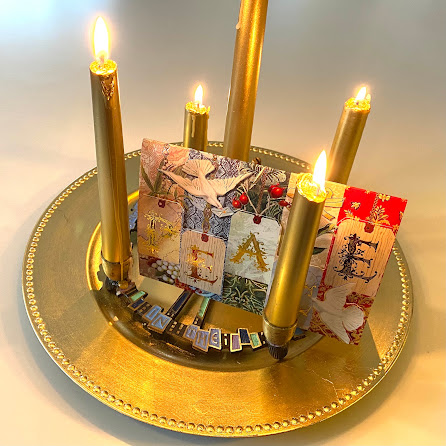
Advent Wreath

ADVENT CANDLES,
ACCUSTOMED, CEREMONIOUS
Thanks to my friend Megan
for the card of PEACE

Yesterday was the First Sunday of Advent, the traditional starting point of the season of holiday anticipation. Advent Sunday is always the fourth Sunday before Christmas Day, which is usually the Sunday immediately following Thanksgiving. Thanksgiving always falls between November 22nd & November 28th, with the First Sunday of Advent falling somewhere between November 27th and December 3rd. The charming daily Advent Calendars -- featuring magical doors, tiny surprises, booklets, pictures, chocolates -- always begin on December 1st, but the weekly Advent Candles began (this year) on November 27th. The timing is perfect: another Thanksgiving has been successfully written into the family history, and now begins the the countdown to Christmas!

Ellie says:
Goodbye Thanksgiving. Hello Christmas!

In his classic "Oratorio," W. H. Auden (1907- 73) captures the outsized sense of expectation that we inevitably bring to this time of year:
"For the innocent children who whispered so excitedly
Outside the locked door where they knew the presents to be
Grew up when it opened. . . . "
Similary, Elizabeth Jennings (1926- 2001) compares the pre - Christmas excitement of a child to the post - Christmas reality of deflated expectations. Her poem moves from forethought / build - up to afterthought / let - down; and the concluding realizations ring just as true for adults as they do for children:
Afterthought

For weeks before it comes I feel excited, yet when it
At last arrives, things all go wrong:
My thoughts don't seem to fit.

I've planned what I'll give everyone and what they'll give to me,
and then on Christmas morning all
The presents seem to be

Useless and tarnished. I have dreamt that everything would come
To life—presents and people too.
Instead of that, I'm dumb.

And people say. 'How horrid! What a sulky little boy!'
And they are right. I can't seem pleased.
The lovely shining toy

I wanted so much when I saw it in a magazine
Seems pointless now. And Christmas too
No longer seems to mean

The hush, the star, the baby, people being kind again.
The bells are rung, sledges are drawn.
And peace on earth for them.


by Elizabeth Jennings
Whether or not Jennings was thinking of Advent, I like the way the final stanza echoes the characteristics of the four Advent candles:

the first candle represents hope & prophecy: "The hush"
the second candle represents peace & Bethlehem: "the star"
the third candle represents love & angels: "the baby"
the fourth candle represents joy & shepherds: "people being kind."

If you want to pull together an Advent wreath, there are numerous designs and color combinations to choose from, but all you really need are four candles that you love the look of, such as this Swedish set from my beloved, inspired and inspiring neighbor Virginia:
or this combination from 2018:
In 2016, I incorporated my brother Dave's hand - crafted Aggravation / Parcheesi / Trouble Game Board into my Advent Candle, lending to the medieval wagon wheel effect:
"The Advent wreath -- usually an evergreen wreath, with candles -- came to us directly from winter solstice celebrations when large wagon wheels were decorated with evergreens and lit candles to encourage the return of light" (p 48).

from Treat or Trick? Halloween in a Globalising World
by Malcolm Foley & Hugh O'Donnell
More Advent Ideas

More Poems by Elizabeth Jennings
This Colorful Friday
The Falling Fruit, The Certain Spring
Childhood Autumn
When I Said Autumnal Equinox
Secret Garden

More by Auden
2023
2025

Next Fortnightly Post
Wednesday, December 14th

Between now and then, read
THE QUOTIDIAN KIT
my shorter, almost daily blog posts
www.dailykitticarriker.blogspot.com

Looking for a good book? Try
KITTI'S LIST
my running list of recent reading
www.kittislist.blogsppot.com

Sunday, February 28, 2021

Tony Brown's Last Lines #11 ~ #17

THE DEER, CASUAL OBSERVERS,
ACCUSTOMED, CEREMONIOUS
Thanks again to Missouri photographer Jay Beets
for sharing his vision of so many curious, contemplative
animals with whom we share our woods!

For those following along, I am posting a few more selections from the "Last Lines" collection of Missouri poet Tony Brown. In addition to previously noted themes of small town strife and literary allusion, the follwing verses honor the Boy Scouts of America, martyrs young and old, and various ghosts of the past, Christmas and otherwise.

#11
Scourge of Squirrels

On a country schoolteacher's salary
One chooses leisure carefully
My father picked black walnuts
An economical hobby since
There were three in our backyard.

A tall one in the middle, straight
And guiltless, filtering the sunset
Two lesser, somewhat crooked,
Twisted, thieving limbs
Escaping over the shaded alley.

In the cooling fall before breakfast
On sleepy adolescent Saturdays
I would watch him at it
Gathering green-mossed hulls
Across the soggy grass
Like a great, blond bird.

He was a beautiful man, my father
Ridiculous as a martyr
Holy and victorious
Knight errant scourge of squirrels.

© Anthony Brown, 2020
#12
Boston Box (A Case of Selectric Memory)

In idleness I sing,
in this morning after alcohol,
looking for a poem somewhere between the pounding
of my head and the hammering of the teletype
and wondering where all the music went
that used to flow through stained fingers
and a broken ballpoint.

Urgent, there is no news today,
or poetry either,
only a few squeaky notes between
vicious strokes of the editor's blue pencil
while I sit across from the slot
waiting for the phone to ring
and hoping it won't.

My column is blank;
I am not filing today.
For the copy that can be explained
is not the eternal copy.

Posts bearing a merchant's façade
play bob-apple with the sun
as I return from my beat with the sheriff.
He has arrested no one today, only a juvenile,
but outside the gray world lies incarcerated
behind sleek aluminum bars
in a prison old as Adam
playing bob-apple with the sun.

And so I play at literature between burglaries,
at dactyls amid city council disputes,
carving a by-line of verse into a monument of newsprint
allegedly committing metaphors in connection with the
liquor store slaying of Billy Joe Doe late Friday
shortly after 11 p.m.

Only this as the deadline beats me about
the head and shoulders with a three-inch
Boston box framing a caucasian male
charged with manslaughter second.

As a bricklayer staggers his stones to heaven
so I pile my words from hell to breakfast.
But even in the obits there are orphans and widows
and Old Lady Qwerty leering like a slut
having beaten me again.

Some happy morning all 42 keys will sing in tune
and the paper-hatted god of printers will transfuse
me with rich, black ink as I slash
my facts and bleed them into print,
dying happy under a banner headline
just after I throw this damn machine away.

© Anthony Brown, 2020

Another Little Friend ~ With Ears Wide Open

#13
Paradise

Christmas among the palms
basking in the Christ child's
Mediterranean climate
while seeking a few days
grace from snow and memory

As I flee to paradise
the question must be asked
what made him flee his?

The sun-drenched golden streets
the warm ocean of eternity
hills lacking ice or crosses
the easy beach and shells
of washed-up, grateful souls

Is that the answer then?
after that three-years'
drive through the flat
red Georgia clay
that God as man transfigured
flew south and set up shop
in Tampa?

© Anthony Brown, 2020

Christmas Cardinal

#14
Ordinary Time

Grand passions serve their turn
and we had them, didn't we dear
before the old year died?

Who might have guessed that
cruel, beautiful us
could lose our legs at last
and fall, broken, into grace?

Now with each millennial day
marching sternly toward Lent
one can't help but think
of the downhill slide
toward something final

Better off just praying,
waiting like a virgin
for that Easter when
graves go obsolete

He'd be 16 this year
and worrying his Mom --
girls, cars, six packs,
all the wrong friends

So what's one afternoon,
a little nausea and bleeding,
a few salty tears,
against love's numinous anxiety?

That's why two angry children
did him in during Ordinary Time
days outside the calendar
stopping for milk afterward

Now, years of random passion
later a wounded we
make a sort of love
from bits and empty places
A mid-life mating with
no joy but its own
closer to death than birth
the end of applied biology

I wonder if he knows
how very much I miss him,
or what a small loss my life
will be set beside hope?

© Anthony Brown, 2020
#15
Gleaning
(To my fellow Eagle Scouts of Troop 99)

Half-frozen boys working a
40-acre bottom patch above
Sugar Creek north of Gilman

Whatever coat I was wearing it
wasn't near warm enough by half,
my hands were numb inside wet gloves

Camp that year was $17.50
Old Witten paid us 50 cents
a sack of squirrel-ravaged ears

It must have been a Saturday
our fathers, mostly men from town,
huddled around a kerosene stove

The morning was perfect November gray
and I was thinking, hell, Aunt Edna
would just give me the damn money anyway

All I had to do was ask.

© Anthony Brown, 2020
#16
Letter to a Mistress
~Author's note: This one is a prose poem [click to read] -- I had been reading a lot of W.H. Auden and Henry James. It is long, depressing, dense, and difficult. But I'm hoping that some of you will stick with it. Obviously in Dec. 2000, I was not feeling my best.

Look who else is Looking Back!

#17
Last Week at Camp
(For Steve, Gail, Brad, and Clark, BSA)

Just down the chapel trail
very like a lover
lightning strikes the lake
and rain falls from a chlorophyll sky
turning the dust to mud
while I dream of sleep in anyone's arms
sheltered by the fragrant skin of old canvas.
In the sudden popcorn of an afternoon storm
we've run for cover to these green communal wombs
to talk and smoke damp cigarettes
to drink hot pop
to ponder the mysteries of foldable women
to go blind nil at hearts.

But I am tenting alone this year
and even the benediction of rain in late July
cannot wash me back to boydom
against the current of shorter days and deeper passions
against the pleasures or being
smart and pretty enough
to make a splash at a good school
to swim the joyful, vicious currents of
Equity greenrooms and professorial liquors
with pavement underfoot, neon over eye,
eggs and champagne after dancing all night
of Mozart, good dope, bookstore weekends
-- and of wearing, for god's sake, long pants.

The sumac fades to old bronze
tiger lilies wilt and rot
soft maples whisper rumors
of chill mornings and russet splendor,
and I am shaving every day
then aching nightly for an insignificant other
who lies in a bed under a roof
whose body smells like burning, suburban leaves.

The storm passes as a sudden sun shines through
a hole in rosy clouds Wally calls the Eye of God,
so in this brief, sweet evening
there is still time for knee socks and khaki
for Retreat and a swim
for late talk by dreaming boys beneath
a sky full of heroes we have learned to call by name.

© Anthony Brown, 2020

MORE TO FOLLOW . . .

Next Fortnightly Post
Sunday, March 14th

Between now and then, read
THE QUOTIDIAN KIT
my shorter, almost daily blog posts
www.dailykitticarriker.blogspot.com

Looking for a good book? Try
KITTI'S LIST
my running list of recent reading
www.kittislist.blogsppot.com

Sunday, July 14, 2013

Two Poems for Bastille Day

A HOUSE WHERE ALL'S ACCUSTOMED, CEREMONIOUS
The Acqua Claudia, built between 38 - 52 AD

"All right . . . all right . . . but apart from better sanitation
and medicine and education and irrigation and public health
and roads and a freshwater system and baths and public order . . .
what have the Romans done for us?"

"Brought peace!"


From Monty Python's Life of Brian

********************
The Fall of Rome
(for Cyril Connolly)

The piers are pummelled by the waves;
In a lonely field the rain
Lashes an abandoned train;
Outlaws fill the mountain caves.

Fantastic grow the evening gowns;
Agents of the Fisc pursue
Absconding tax-defaulters through
The sewers of provincial towns.

Private rites of magic send
The temple prostitutes to sleep;
All the literati keep
An imaginary friend.

Cerebrotonic Cato may
Extol the Ancient Disciplines,
But the muscle-bound Marines
Mutiny for food and pay.

Caesar's double-bed is warm
As an unimportant clerk
Writes I DO NOT LIKE MY WORK
On a pink official form.

Unendowed with wealth or pity,
Little birds with scarlet legs,
Sitting on their speckled eggs,
Eye each flu-infected city.

Altogether elsewhere, vast
Herds of reindeer move across
Miles and miles of golden moss,
Silently and very fast.

1947
W. H. Auden

"Altogether elsewhere . . . "

Four Preludes
On Playthings of the Wind


1
The woman named Tomorrow
sits with a hairpin in her teeth
and takes her time
and does her hair the way she wants it
and fastens at last the last braid and coil
and puts the hairpin where it belongs
and turns and drawls: Well, what of it?
My grandmother, Yesterday, is gone.
What of it? Let the dead be dead.

2
The doors were cedar
and the panel strips of gold
and the girls were golden girls
and the panels read and the girls chanted:
We are the greatest city,
the greatest nation:
nothing like us every was.
The doors are twisted on broken hinges.
Sheets of rain swish through on the wind
where golden girls ran and the panels read:
We are the greatest city,
the greatest nation:
nothing like us ever was.

Rainy Day at the Colosseum

3
It has happened before.
Strong men put up a city and got
a nation together,
And paid singers to sing and women
to warble: We are the greatest city,
the greatest nation,
nothing like us ever was.

And while the singers sang
and the strong men listened
and paid the singers well
and felt good about it all,
there were rats and lizards who listened
... and the only listeners left now
... are ... the rats .. and the lizards.

And there are black crows
crying, "Caw, caw,"
bringing mud and sticks
building a nest over the words carved
on the doors where the panels were cedar
and the strips on the panels were gold
and the golden girls came singing:
We are the greatest city,
the greatest nation:
nothing like us ever was.

The only singers now are crows crying, "Caw, caw,"
And the sheets of rain whine in the wind and doorways.
And the only listeners now are ... the rats ... and the lizards.

~ "the orange dot marks the trail" ~

4
The feet of the rats
scribble on the doorsills;
the hieroglyphs of the rat footprints
chatter the pedigrees of the rats
and babble of the blood
and gabble of the breed
of the grandfathers and the great-grandfathers
of the rats.

And the wind shifts
and the dust on a doorsill shifts
and even the writing of the rat footprints
tells us nothing, nothing at all
about the greatest city, the greatest nation
where the strong men listened
and the women warbled: Nothing like us ever was.


1926
Carl Sandburg

Via Scala
All photos of Rome and environs taken by Ben McCartney
~ Summer 2012 ~

SEE YOU IN TWO WEEKS FOR MY
Next Fortnightly Post
Sunday, July 28th

Between now and then, read
THE QUOTIDIAN KIT
my shorter, almost daily blog posts
www.dailykitticarriker.blogspot.com


Currently featuring photographs from Paris
by Steven La Vigne

Looking for a good book? Try
KITTI'S LIST
my running list of recent reading
www.kittislist.blogspot.com

Sunday, October 14, 2012

Icarus, Who Really Fell

ACCUSTOMED, CEREMONIOUS
Landscape With the Fall of Icarus, 1588
by Pieter Brueghel the Elder, 1525(?) - 1569


In this book, Gabriel Deblander creates a narrative
to accompany story told by the painting:
Currently out of print, but used copies available.

For today's post, I thought I would continue with the theme of Greek mythology -- last time it was patient Penelope, wife of adventurous Odysseus; this time the impatient Icarus, son of the inventor and designer of the Labyrinth, Daedalus, in which they are subsequently imprisoned. In the ancient myth, Daedalus devises an ingenious plan for himself and his son: they will build wings and fly to freedom. [How do they obtain supplies and materials in prison? You'll just have to suspend your disbelief on that one]. When the wings are ready, Daedalus forewarns Icarus of the need to fly well below the sun. The escape, as the story goes, is successful, but Icarus, exulting in his newly found power of flight, pays no heed to his father's advice. Despite the repeated cries of Daedalus, Icarus flies too near the sun, his wings melt, and he falls to his death in the sea.

Many artists have illustrated the glory and fate of heroic, foolhardy Icarus, but none so memorably as Brueghel the Elder. Particularly in his insignificant placement of the title character, his finely detailed "Landscape" is like no other. A close look at the lower right - hand corner reveals the ill - fated, despairing Icarus, his flailing legs slipping away forever beneath the surface of the sea.

Two modern poets, Williams Carlos Williams and W. H. Auden, have approached the painting very differently in their ekphrastic poems (click for examples, including Bruegel / Auden / Williams). In contrast to the intricate beauty of Brueghel's painting, Williams provides five sparse sentences:

Landscape With The Fall of Icarus
According to Brueghel
when Icarus fell
it was spring

a farmer was ploughing
his field
the whole pageantry

of the year was
awake tingling
near

the edge of the sea
concerned
with itself

sweating in the sun
that melted
the wings' wax

unsignificantly
off the coast
there was

a splash quite unnoticed
this was
Icarus drowning


by William Carlos Williams

Williams' poems is incredibly straight forward. After showing my students the connections between this poem and the painting, I always thought it was fun to diagram and punctuate the sentences. Auden's poem is dense, requiring perhaps some art history and additional work by Bruegel to truly comprehend.

Winter Landscape with Skaters and a Bird Trap

Musee des Beaux Arts
About suffering they were never wrong,
The old Masters: how well they understood
Its human position: how it takes place
While someone else is eating or opening a window or just walking dully along;
How, when the aged are reverently, passionately waiting
For the miraculous birth, there always must be
Children who did not specially want it to happen, skating
On a pond at the edge of the wood:
They never forgot
That even the dreadful martyrdom must run its course
Anyhow in a corner, some untidy spot
Where the dogs go on with their doggy life and the torturer's horse
Scratches its innocent behind on a tree.

In Breughel's Icarus, for instance: how everything turns away
Quite leisurely from the disaster; the ploughman may
Have heard the splash, the forsaken cry,
But for him it was not an important failure; the sun shone
As it had to on the white legs disappearing into the green
Water, and the expensive delicate ship that must have seen
Something amazing, a boy falling out of the sky,
Had somewhere to get to and sailed calmly on.


W. H. Auden

It's fairly easy to find essays comparing these well - known poems by Auden and Williams. However, I like to read them along with a couple of other, less well - known Icarus poems by two writers who look at the mythological story from an amazingly unique perspectives: "Where You Go When She Sleeps" by T. R. Hummer; and "Waiting for Icarus" by Muriel Rukeyser.

In "Waiting for Icarus," Muriel Rukeyser embellishes the already existing myth, writing from the perspective of a character of her own invention, the girlfriend of Icarus. Alluding to Daedalus and Icarus, and their attempt to escape the Labyrinth by flying to freedom, Rukeyser alters the circumstances somewhat, and her adjustments serve the poem well. In the original myth, there is no mention of a girlfriend for Icarus; and if there were, her last contact with him would have been before his imprisonment in the Labyrinth, making it impossible for her to know of his attempted escape. But this narrator knows all about the wings and the wax. As she waits, she tells of her past with Icarus and hints at the conflict that must have existed between him and his father. She reminisces of the better days, reluctant to admit that Icarus may really be gone or dead, and not coming back.

She loses track of time, and even as she waits, the doubts planted by others sift through her thoughts. She reveals uncertainty, despair and, near the end, another sentiment as well -- the frustration of waiting impotently at home, maintaining the status quo, like Penelope; while Icarus, like brave Ulysses seeks out action, adventure, experience.

Waiting for Icarus
He said he would be back and we'd drink wine together
He said that everything would be better than before
He said we were on the edge of a new relation
He said he would never again cringe before his father
He said that he was going to invent full-time
He said he loved me that going into me
He said was going into the world and the sky
He said all the buckles were very firm
He said the wax was the best wax
He said Wait for me here on the beach
He said Just don't cry

I remember the gulls and the waves
I remember the islands going dark on the sea
I remember the girls laughing
I remember they said he only wanted to get away from me
I remember mother saying : Inventors are like poets,
a trashy lot
I remember she told me those who try out inventions are worse
I remember she added : Women who love such are the
Worst of all
I have been waiting all day, or perhaps longer.
I would have liked to try those wings myself.
It would have been better than this.

Muriel Rukeyser
from The Collected Poems of Muriel Rukeyser.

In the nearly mystical "Where You Go When She Sleeps," T. R. Hummer starts by comparing a woman's hair to the color of golden grain. Mesmerized by her hair, he next compares himself to the farmer's son who fell to his death when gazing over the edge of a silo mesmerized by the swirls of oats. Then he imagines the thin - armed boy as Icarus with his fabled wings. Both boys forget their fathers' words of caution, both feel the sun hot on their backs as they grow dizzy and fall, one into the ocean, one into the sea of grain.

An agricultural safety brochure depicts the danger

I can't help but notice the similarity between the silo victim and
Matisse's paper cutout of Icarus:

Where You Go When She Sleeps
What is it when a woman sleeps, her head bright
In your lap, in your hands, her breath easy now as though it had never been
Anything else, and you know she is dreaming, her eyelids
Jerk, but she is not troubled, it is a dream
That does not include you, but you are not troubled either,
It is too good to hold her while she sleeps, her hair falling
Richly on your hands, shining like metal, a color
That when you think of it you cannot name, as though it has just
Come into existence, dragging you into the world in the wake
Of its creation, out of whatever vacuum you were in before,
And you are like the boy you heard of once who fell
Into a silo full of oats, the silo emptying from below, oats
At the top swirling in a gold whirlpool, a bright eddy of grain, the boy
You imagine, leaning over the edge to see it, the noon sun breaking
Into the center of the circle he watches, hot on his back, burning
And he forgets his father’s warning, stands on the edge, looks down,
The grain spinning, dizzy, and when he falls his arms go out, too thin
For wings, and he hears his father’s cry somewhere, but is gone
Already, down in a gold sea, spun deep in the heart of the silo,
And when they find him, he lies still, not seeing the world
Through his body but through the deep rush of grain
Where he has gone and can never come back, though they drag him
Out, his father’s tears bright on both their faces, the farmhands
Standing by blank and amazed - you touch that unnamable
Color in her hair and you are gone into what is not fear or joy
But a whirling of sunlight and water and air full of shining dust
That takes you, a dream that is not of you but will let you
Into itself if you love enough, and will not, will never let you go.


~ T. R. Hummer
from The Angelic Orders

Another version of The Fall of Icarus
by Henri Matisse

SEE YOU IN TWO WEEKS FOR MY
Next Fortnightly Post
Sunday, October 28th

Between now and then, read
THE QUOTIDIAN KIT
my shorter, almost daily blog posts
www.dailykitticarriker.blogspot.com

Looking for a good book? Try
KITTI'S LIST
my running list of recent reading
www.kittislist.blogspot.com

Friday, January 14, 2011

Keep Christmas With You

A HOUSE WHERE ALL'S ACCUSTOMED, CEREMONIOUS
~~ Reminds Gerry of his grandfather's "Old House" in England ~~
Urban Garden Under Snow

by Douglas Percy Bliss (Scottish Painter, 1900 - 84)

*******************************************

Presents From A Friend!

"But while we often like to comfort
or flatter ourselves with the thought that the future is now,
the brute truth is, the future is not now. The present is now.
The future is later -- in some cases much later."


quotation from the humorous little book,
Santa Lives! Five Conclusive Arguments
for the Existence of Santa Claus

by wry humorist Elllis Weiner (b 1950)
Coauthor of Yiddish with Dick and Jane and The Joy of Worry

********************************************************

The following poem by W. H. Auden is one of my favorites, but with all the presents put away, and the neighbors' (not mine! not yet!) undecorated trees abandoned by the curbside, I was afraid that I might have left it too late for blogging. You often see this poem appearing last, in the final "end - of - season" section, in the holiday anthologies and poetry collections. The opening lines tell you right away that it is a post - Christmas poem, appropriate for the day or even the week after -- but the middle of January?

Luckily, I came across an incredibly insightful, helpful essay, by ethics professor William F. French, entitled "Auden’s Moral Comedy: A Late-Winter Reading" (click to read). Not mid - January, mind you, but "Late - Winter." Clearly, I still have plenty of time! Actually, I'm early!

French writes that Auden's poem "has more to do with the serious confrontation with emptiness in late winter than with holiday good cheer in December." He suggests reading it near the end of January or during February, "when the chilling winds and numbing routine have taken their toll . . . Only a late-winter reading allows access to the deeper layers of meaning in the poem." Although it is better known by its subtitle ("A Christmas Oratorio") French prefers to focus on the title -- "For the Time Being," a concept that he defines in his analysis as "the deadeningly mundane . . . the monotonous sludge . . . the general drudgery . . . the flat stretches." That's the Time Being for you! (See Ellis Weiner above for a more humorous explanation, but just as true.)

As the ennobling sentiments of the season recede, we must accept the fact that "our ordinary existence is lived out in a post-Christmas world . . . the mundane world of the everyday," the quotidian, shall we say. Here is a brief excerpt from Auden's lengthy (around fifty pages) "Oratorio":

For the Time Being: A Christmas Oratorio
Well, so that is that. Now we must dismantle the tree,
Putting the decorations back into their cardboard boxes --
Some have got broken -- and carrying them up to the attic.
The holly and the mistletoe must be taken down and burnt,
And the children got ready for school. There are enough
Left-overs to do, warmed-up, for the rest of the week --
Not that we have much appetite, having drunk such a lot,
Stayed up so late, attempted -- quite unsuccessfully --
To love all of our relatives, and in general
Grossly overestimated our powers. Once again
As in previous years we have seen the actual Vision and failed
To do more than entertain it as an agreeable
Possibility . . .

The Christmas Feast is already a fading memory,
And already the mind begins to be vaguely aware
Of an unpleasant whiff of apprehension at the thought
Of Lent and Good Friday which cannot, after all, now
Be very far off. But, for the time being, here we all are . . .

And the kitchen table exists because I scrub it.
It seems to have shrunk during the holidays. The streets
Are much narrower than we remembered; we had forgotten
The office was as depressing as this. To those who have seen
The Child, however dimly, however incredulously,
The Time Being is, in a sense, the most trying time of all.
For the innocent children who whispered so excitedly
Outside the locked door where they knew the presents to be
Grew up when it opened. . . .

In the meantime
There are bills to be paid, machines to keep in repair,
Irregular verbs to learn, the Time Being to redeem
From insignificance. The happy morning is over,
The night of agony still to come; the time is noon:
When the Spirit must practice his scales of rejoicing
Without even a hostile audience, and the Soul endure
A silence that is neither for nor against her faith
That God's Will will be done, That, in spite of her prayers,
God will cheat no one, not even the world of its triumph.


by W. H. Auden (1907 - 73)
Anglo-American poet
Born in England, later an American citizen

*******************************************

Consistent with Auden's "unpleasant whiff of apprehension at the thought / Of Lent and Good Friday," contemporary poet Steve Turner presents a somewhat bleaker vision:

Christmas is Really for the Children
Christmas is really
for the children.
Especially for children
who like animals, stables,
stars and babies wrapped
in swaddling clothes.
Then there are wise men,
kings in fine robes,
humble shepherds and a
hint of rich perfume.

Easter is not really
for the children
unless accompanied by a
cream filled egg.
It has whips, blood, nails,
a spear and allegations
of body snatching.
It involves politics, god
and the sins of the world.
It is not good for people
of a nervous disposition.
They would do better to
think on rabbits, chickens
and the first snowdrop
of spring.

Or they'd do better to
wait for a re-run of
Christmas without asking
too many questions about
what Jesus did when he grew up
or whether there's any connection.


Steve Turner (b. 1949)
British music journalist, biographer, and poet

***********************************************

And finally, some excellent post-seasonal advice from Sesame Street. If you're not familiar with this song already, perhaps from watching Christmas Eve on Sesame Street a couple hundred times with your kids, then you are in for a treat. Click on the title to view the children's surprising and touchingly rendered sign language presentation:

Keep Christmas With You All Through the Year
When Christmas time is over
and presents put away,
don't be sad
There'll be so much to treasure
about this Christmas day
and the fun we've had
So may happy feelings to celebrate with you
And, oh, the good time hurry by so fast,
But even when it's over
there's something you can do to make
Christmas last:

Keep Christmas with you
All through the year,
When Christmas is over,
You can keep it near.
Think of this Christmas day
When Christmas is far away.

Keep Christmas with you
All through the year,
When Christmas is over,
Save some Christmas cheer.
These precious moments,
Hold them very dear
And keep Christmas with you
All through the year.

Christmas means the spirit of giving,
Peace and joy to you,
The goodness of loving,
The gladness of living;
These are Christmas too.

So, keep Christmas with you
All through the year,
When Christmas is over,
Save some Christmas cheer.
These precious moments,
Hold them very dear
And keep Christmas with you
All through the year.


lyrics by David Axelrod (b. 1936)
American lyricist,composer, and producer

music by Sam Pottle (1934 - 78)
American composer, conductor, musical director

from Christmas Eve on Sesame Street

Which one should I open next?
SEE YOU IN TWO WEEKS FOR MY
Next Fortnightly Post
Friday, January 28, 2011

Between now and then, read
THE QUOTIDIAN KIT
my shorter, almost daily blog posts
www.dailykitticarriker.blogspot.com

Looking for a good book? Try
KITTI'S LIST
my running list of recent reading
www.kittislist.blogspot.com