"One ought, every day at least, to hear a little song, read a good poem, see a fine picture
and, if possible, speak a few reasonable words." ~Goethe

~ also, if possible, to dwell in "a house where all's accustomed, ceremonious." ~Yeats

Showing posts sorted by relevance for query yeats. Sort by date Show all posts

Sunday, November 28, 2010

A House Where All's Accustomed, Ceremonious

ACCUSTOMED, CEREMONIOUSWho wouldn't want to live in Story, Indiana? Sounds like a place
right out of a book . . . or a place where you could read all the time!

Rustic Hoosier Postcard of Stone Head, Brown County
by photographer Darryl Jones
See also The Spirit of the Place: Indiana Hill Country

As you may have heard me say before, my inspiration for designing this blog came from two writers: Goethe, who hopes that each day might include a song, a poem, some fine art, a few wise words; and Yeats who describes "a house where all's accustomed, ceremonious." This poem, particularly the closing, has been a favorite of mine for many years, decades:

Prayer For My Daughter

Once more the storm is howling, and half hid
Under this cradle-hood and coverlid
My child sleeps on. There is no obstacle
But Gregory's wood and one bare hill
Whereby the haystack- and roof-levelling wind,
Bred on the Atlantic, can be stayed;
And for an hour I have walked and prayed
Because of the great gloom that is in my mind.

I have walked and prayed for this young child an hour
And heard the sea-wind scream upon the tower,
And under the arches of the bridge, and scream
In the elms above the flooded stream;
Imagining in excited reverie
That the future years had come,
Dancing to a frenzied drum,
Out of the murderous innocence of the sea.

May she be granted beauty and yet not
Beauty to make a stranger's eye distraught,
Or hers before a looking-glass, for such,
Being made beautiful overmuch,
Consider beauty a sufficient end,
Lose natural kindness and maybe
The heart-revealing intimacy
That chooses right, and never find a friend.

Helen being chosen found life flat and dull
And later had much trouble from a fool,
While that great Queen, that rose out of the spray,
Being fatherless could have her way
Yet chose a bandy-leggèd smith for man.
It's certain that fine women eat
A crazy salad with their meat
Whereby the Horn of Plenty is undone.

In courtesy I'd have her chiefly learned;
Hearts are not had as a gift but hearts are earned
By those that are not entirely beautiful;
Yet many, that have played the fool
For beauty's very self, has charm made wise,
And many a poor man that has roved,
Loved and thought himself beloved,
From a glad kindness cannot take his eyes.

May she become a flourishing hidden tree
That all her thoughts may like the linnet be,
And have no business but dispensing round
Their magnanimities of sound,
Nor but in merriment begin a chase,
Nor but in merriment a quarrel.
O may she live like some green laurel
Rooted in one dear perpetual place.

My mind, because the minds that I have loved,
The sort of beauty that I have approved,
Prosper but little, has dried up of late,
Yet knows that to be choked with hate
May well be of all evil chances chief.
If there's no hatred in a mind
Assault and battery of the wind
Can never tear the linnet from the leaf.

An intellectual hatred is the worst,
So let her think opinions are accursed.
Have I not seen the loveliest woman born
Out of the mouth of Plenty's horn,
Because of her opinionated mind
Barter that horn and every good
By quiet natures understood
For an old bellows full of angry wind?

Considering that, all hatred driven hence,
The soul recovers radical innocence
And learns at last that it is self-delighting,
Self-appeasing, self-affrighting,
And that its own sweet will is Heaven's will;
She can, though every face should scowl
And every windy quarter howl
Or every bellows burst, be happy still.

And may her bridegroom bring her to a house
Where all's accustomed, ceremonious;
For arrogance and hatred are the wares
Peddled in the thoroughfares.
How but in custom and in ceremony
Are innocence and beauty born?
Ceremony's a name for the rich horn,
And custom for the spreading laurel tree.


William Butler Yeats, 1865 - 1939
Irish poet and dramatist
Winner of the Nobel Prize for Literature, 1923

The next two poems made their way into my notebook more recently. A few years ago, I discovered Louis Untermeyer's "Prayer For This House" in a poetry anthology that my children brought home from school; and around the same time, a copy of Robert Louis Stevenson's "Family Prayer" was given to me by a neighbor in Philadelphia who told me that her mother read this poem every year before Thanksgiving dinner. Both are similar in tone and purpose to each other, and to Yeats' "Prayer for My Daughter":

Yeats prays for happiness, though "every bellows burst"
Untermeyer - for warmth, "though all the world grow chill"
Stevenson - for loyalty "down to the gates of death"

Yeats invokes "custom" and "ceremony" in the face of howling winds
Untermeyer - faith "to withstand the battering storm"
Stevenson - constancy in "all changes of fortune."

Yeats seeks a refuge from "arrogance and hatred"
Untermeyer - from "the raucous shout" of hate
Stevenson - from peril, tribulation, wrath

Yeats desires reprieve from the scowling face
Untermeyer - from "ill-fortunes," roar and rain
Stevenson - from "the lurking grudge"

Yeats hopes for the triumph of "innocence and beauty"
Untermeyer - for a "shrine" of peace and laughter
Stevenson - for "courage and gaiety and the quiet mind."

May their prayers be answered.

We Give Thanks

Prayer For This House
May nothing evil cross this door.
And may ill-fortunes never pry
about these windows; may the roar
and rains go by.

Strengthened by faith, the rafters will
withstand the battering of the storm.
This hearth, though all the world grow chill
will keep you warm.

Peace shall walk softly through these rooms,
touching your lips with holy wine,
till every casual corner blooms
into a shrine.

Laughter shall drown the raucous shout
and, though the sheltering walls are thin,
may they be strong enough to keep hate out
and hold love in.


Louis Untermeyer, 1885 - 1977
American poet, critic, anthologist
14th United States Poet Laureate, 1961 - 63

Prayers at Breakfast

A Family Prayer
Lord, behold our family here assembled.
We thank you for this place in which we dwell,
for the love that unites us,
for the peace accorded to us this day,
for the hope with which we expect the morrow;
for the health, the work, the food and the bright skies
that make our lives delightful;
for our friends in all parts of the earth.

Let peace abound in our small company.
Purge out of every heart the lurking grudge.
Give us grace and strength to forbear and to persevere.
Give us the grace to accept and to forgive offenders.
Forgetful ourselves, help us to bear cheerfully
the forgetfulness of others.

Give us courage and gaiety and the quiet mind.
Spare to us our friends, soften to us our enemies.
Bless us, if it may be, in all our innocent endeavors.

If it may not, give us the strength to encounter
that which is to come,
that we be brave in peril, constant in tribulation,
temperate in wrath, and in all changes of fortune,
and, down to the gates of death,
loyal and loving one to another.


Robert Louis Stevenson 1850 - 1894
Scottish poet and novelist

Now you can store these poems somewhere safe, then take them out to share around the table next Thanksgiving!

Autumn Leaves

All paintings above by
Jessie Willcox Smith, 1863 - 1935
American illustrator of magazines and children's books

SEE YOU IN TWO WEEKS FOR MY
Next Fortnightly Post
Tuesday, December 14, 2010

Between now and then, read
THE QUOTIDIAN KIT: www.dailykitticarriker.blogspot.com
my shorter, almost daily blog posts
www.dailykitticarriker.blogspot.com

Looking for a good book? Try
KITTI'S LIST: www.kittislist.blogspot.com
my running list of recent reading
www.kittislist.blogspot.com

Monday, May 14, 2012

Life -- A Little Strip of Time

A HOUSE WHERE ALL'S ACCUSTOMED, CEREMONIOUS
MONK'S HOUSE ~ HOME OF LEONARD & VIRGINIA WOOLF


VIRGINIA WOOLF'S LIVING ROOM

For Mother's Day, I thought I would write about one of the most steadfast mothers in modern British fiction, Mrs. Ramsay from Virginia Woolf's novel To the Lighthouse. Virginia Woolf had no children, but Mrs. Ramsay has eight; and Woolf intuitively fills Mrs. Ramsay's head and the first half of the novel with touching motherly insights. Except for the youngest son James, the Ramsay children are rarely mentioned in literary criticism of To the Lighthouse. James, of course, figures prominently at the center of the conflict that opens the novel: will he or will he not be taken to the lighthouse the next day?

But what of James' siblings and Mrs. Ramsay's feelings for them: Andrew, Prue, Jasper, Rose, Roger, Nancy, and Cam? Sitting out on the yard, visiting with her guests and surrounded by her children, Mrs. Ramsay is the image of earthliness, providing spiritual and artistic inspiration to others. Her ability to inspire is rooted in her role as a living, earthly mother, caring for her children, experiencing conflict with them and for them, providing for them at present, and hoping they may find a solid happiness that will stand against the unknowable future of temporal existence. Monitoring the behavior of her brood, Mrs. Ramsay wonders at the early development of their capacity for strife and prejudice: "They were so critical, her children" (17).

One of the guests, Mr. Bankes, relates his singular method of distinguishing the children one from another: "As for being sure which was which, or in what order they came, that was beyond him. He called them privately after the Kings and Queens of England; Cam the Wicked, James the Ruthless, Andrew the Just, Prue the Fair -- for Prue would have beauty, he thought, how could she help it? -- and Andrew brains" (37). Mr. Ramsay, himself, makes the following assessment of his role as father: "The father of eight children -- he reminded himself. And he would have been a beast and a cur to wish a single thing altered. Andrew would be a better man than he had been. Prue would be a beauty, her mother said. They would stem the flood a bit. That was a good bit of work on the whole -- his eight children" (106).

From Mrs. Ramsay's point of view comes the one list in the book to mention every child. She presents a brief but full bodied portrait of each, thinking of James and Cam first with especial longing, for they are her babies:

"Oh but she never wanted James to grow a day older! Or Cam either. These two she would have liked to keep for ever just as they were, demons of wickedness, angels of delight, never to see them grow up into long - legged monsters. Nothing made up for the loss. . . . why should they grow up and lose all that? . . . She would have liked always to have had a baby. She was happiest carrying one in her arms. . . . Prue, a perfect angel with the others, and sometimes now, at night especially, she took one's breath away with her beauty. Andrew -- even her husband admitted that his gift for mathematics was extraordinary. And Nancy and Roger, they were both wild creatures. . . . As for Rose, her mouth was too big, but she had a wonderful gift with her hands. . . . She did not like it that Jasper should shoot birds; but it was only a stage; they all went through stages. Why she asked, pressing her chin on James's head, should they grow up so fast? . . . And, touching his hair with her lips, she thought, he will never be so happy again. . . . They were happier now than they would ever be again. A tenpenny tea set made Cam happy for days." (89 - 90)

She sees the mortality of her children; and despite the promise she sees in each one, she senses the fleeting quality of their happiness and their childhood. She questions the temporariness and the temporality of their existence, but she does not consider immortality, only their earthly happiness. She does not want them ever to grow away from the state of "radical innocence" that Yeats refers to in his poem "A Prayer for My Daughter":

Prayer For My Daughter
Considering that, all hatred driven hence,
The soul recovers radical innocence
And learns at last that it is self-delighting,
Self-appeasing, self-affrighting,
And that its own sweet will is Heaven's will;
She can, though every face should scowl
And every windy quarter howl
Or every bellows burst, be happy still.

And may her bridegroom bring her to a house
Where all's accustomed, ceremonious;
For arrogance and hatred are the wares
Peddled in the thoroughfares.
How but in custom and in ceremony
Are innocence and beauty born?
Ceremony's a name for the rich horn,
And custom for the spreading laurel tree.


William Butler Yeats, 1865 - 1939
Irish poet and dramatist
Winner of the Nobel Prize for Literature, 1923

[See previous posts:
September 14, 2009
November 28, 2010]

Mrs. Ramsay's wish for her children is as fervent as Yeats' but not as hopeful. She wishes for a prolongation of childhood rather than a recovery of innocence. She has no faith in reparation for loss nor in any power which will guarantee happiness to her children in the face of unkindness and upheaval. Instead she wishes that neither she nor they would ever lose the days of their innocence. When she says, "Nothing made up for the loss," she thinks of her own loss as the mother of little dependent children. But knowing how they will slip away, she resigns herself, thinking of Mr. Ramsay's accusation that she is "pessimistic" and has a "gloomy view of life" (91). Though her view of life and time passing angers her husband, the nostalgia she anticipates and her clear sense of loss and finality ("She thought life -- and a little strip of time presented itself to her eyes," 91) is not unfounded. It is, in fact, confirmed by the detached narrator of the middle section of the novel who impartially and in merest passing records the deaths of Prue in childbirth, Andrew at war, and Mrs. Ramsay herself in the night.

Prue's early death, though, is quite the opposite of the future envisioned for her by her mother. For despite Mrs. Ramsay's private certainty that "there was no treachery too base for the world to commit" (98), she holds out hope and endurance to her children:

" . . . she must admit that she felt this thing that she called life terrible, hostile, and quick to pounce on you if you gave it a chance. There were the eternal problems: suffering; death; the poor. There was always a woman dying of cancer even here. And yet she said to all these children, You shall go through it all. To eight people she said relentlessly that." (92)

Tablescape by Katy Bunder

At the dinner party, Mrs. Ramsay notices that Prue is "just beginning, just moving, just descending" into the adult world (164) and protectively wills that Prue shall have a happy future. In her concern for Prue's contentment, Mrs. Ramsay mirrors another of the desires expressed in Yeats' "Prayer," his hope that his daughter will be blessed with a loving mate and a happy home, grounded on the stability and affirmation of tradition. She expresses her appreciation of a place "where all's accustomed." She knows the significance of being "rooted in one dear perpetual place."

Mrs. Ramsay joys in her children ("For one's children so often gave one's own perceptions a little thrust forward," 122); and she is sensitive to their aches and pains, especially their emotional woes. Her heart breaks at the thought of James' disappointment when the excursion to the lighthouse is cancelled. The novel is punctuated by her motherly concern for James's frustrated expedition and a desire to somehow make up to him what cannot be made up.

She is sympathetic also with her creative daughter, Rose, seeing that in some ways they are so alike. In the scene preceding the famous dinner party, Mrs. Ramsay is seen at her most intimate and relaxed with the two children, Rose and Jasper, who visit her room before dinner, ministering to her as she looks to them to inspire her perceptions. She is happy, teasing and indulging them as they help her decide what necklace to wear to dinner.

She urges them to hurry with the jewels, " 'choose, dearests, choose.' " She is not loathe to be associated with their choices. She is patient, knowing that Rose has "some hidden reason of her own for attaching great importance to this choosing what her mother was to wear. . . . And Rose would grow up; and Rose would suffer, she supposed with these deep feelings. . . . Choose me a shawl, she said, for that would please Rose, who was bound to suffer so." She identifies closely with Rose and realizes that her feelings for Rose are for herself as well. When exploring her own bewilderment over Rose's little ceremony of choosing the jewels, she thinks, "Like all feelings felt for oneself . . . it made one sad" (122 - 23).

Mrs. Ramsay is intuitive and creative, exhibiting love and care and motherly concern in numerous instances throughout the first section of the novel. She is filled with anxiety on her children's behalf, but also with pride. Fearing that the children are about to erupt in laughter over some private joke at dinner, she says to them -- by way of maintaining order and altering the dinner table dynamic: " 'Light the candles' " (145). Standing down the length of the table and illuminating an elaborate centerpiece designed by Rose, the tall candles number eight, just as Mrs. Ramsay's children do.
Happy Mother's Day!

Tablescape by Tina McCartney

SEE YOU IN TWO WEEKS FOR MY
Next Fortnightly Post
Monday, May 28th

Between now and then, read
THE QUOTIDIAN KIT
my shorter, almost daily blog posts
www.dailykitticarriker.blogspot.com

Looking for a good book? Try
KITTI'S LIST
my running list of recent reading
www.kittislist.blogspot.com


My friend Jill sent me the little wreath of roses a couple of years ago, and I put it inside this larger Easter wreath to make a summery candleholder.

Monday, September 14, 2009

Not a Memo, A Mission Statement

ACCUSTOMED, CEREMONIOUS
"One ought, every day at least, to hear a little song,
read a good poem, see a fine picture
and, if possible, speak a few reasonable words."

Back in February, when I clicked on "Create Blog," I picked this self - explanatory comment from Goethe to appear continuously as part of the header above. At the start I didn't think to explicate it any further, but now that my literary blog is six months old, perhaps I should.

When I designed this page, the space I had in mind was one where readers would encounter everything on Goethe's list: selections from all the wonderful poetry that I have been reading and collecting ever since forever, the song lyrics that make up the soundtrack of my life, and a few reasonable words of my own (or so I'd like to think!), tying it all together with the perfect visuals into an image that you won't forget.

Goethe makes it sound so simple, I thought I'd give it a try. For a title, I decided to start with my name. That would be easy enough: Kitti Carriker: A Fortnightly Literary Blog of Connection & Coincidence.

Fortnightly: Well, that just sounds so cool and literary, plus I felt pretty sure I could commit to an essay every two weeks.

Connection: I wanted, if possible, to create a place of connections, in the spirit of E. M. Forster, who implores us in Howards End to connect: "Only connect the prose and the passion, and both will be exalted, and human love will be seen at its height. Live in fragments no longer. Only connect . . . ."

Coincidence: As I wrote in an earlier blog post: "Sometimes life is so full of coincidences that I think my head will split open trying to take them all in! It's enough to make me believe in the whole Universe at once!" I stand by that. I want to capture all the unexpected connections that amaze and surprise and suggest a pattern.

Back in college when I worked on the literary magazine, I was known as the editor with "a poem for every poem" because no matter what I read, I was always reminded of something else -- kind of like that "Scooby-Doo" episode when Daphne asks Velma: "Do you have a book for every occasion?" And Velma answers, "Actually, yes."

A poem for every poem, and a book for every book! Those are the literary connections and coincidences that I am always on the lookout for, not that they require much tracking down, since they usually find me before I find them.

In addition, I wanted the blog to include my favorite passage from Yeats' poem "A Prayer For My Daughter." Naturally, he wants so many things for her, but chiefly a heart full of "radical innocence" and a life "Rooted in one dear perpetual place . . . a house / Where all's accustomed, ceremonious."

How but in custom and in ceremony
Are innocence and beauty born?
Ceremony's a name for the rich horn,
And custom for the spreading laurel tree.


From childhood -- perhaps impressed upon me when I first read The Little Red Story Book (more on that later), anyway long before I ever read Yeats -- one of my goals was to organize the kind of home described in his poem, where order would triumph over chaos and no holiday would ever go unremarked: accustomed and ceremonious, familiar yet celebratory.

Thus the line from "A Prayer For My Daughter" has became the perpetual caption for the pictures that change with every post. I hope that in some way (though not always in the same way) these photographs and illustrations portray "a house where all's accustomed, ceremonious." Sometimes it's my own house (or former houses), other times, a cathedral, a log cabin, a playground, an historical custom house, a neighborhood mural, a village mosaic, a medieval tapestry. I admit, these last two were not created by me, though I take most (not all) of the photographs and did help paint the mural!

And those raspberry parfaits you see up there? I didn't make them myself either (the credit goes to my dessert specialists, Ben and Karen . . . and to Gerry for growing the fruit). But I did line them up on the windowsill and photograph them. And I did eat one a little while later -- delicious!

So that's what's happening on this page every couple of weeks! Oops, I mean, every fortnight! Maybe it all made sense before. If it didn't, I hope it does now, perfect sense!

New Paint Colors: Silver Lace Vine and Raspberry Parfait

Wednesday, September 14, 2011

Dolls in Literature

A HOUSE WHERE ALL'S ACCUSTOMED, CEREMONIOUS
I like the American Express ad, where Tina Fey says that her "Most interesting souvenir" is "an Amish baby doll with no face." I wonder where she purchased hers? I found this pair at Reading Terminal Market in Philadelphia, and my neighbor John Woodin photographed them for my book jacket:

"Why shouldn't we, so generally addicted to the gigantic,
at last have some small works of art,
some short poems, short pieces of music
[. . .] some intimate, low-voiced, and delicate things
in our mostly huge and roaring, glaring world?"

~ Elizabeth Bishop ~

"For our very humanity is in our urge
to make magic with images
[& miniatures]."

~ Erica Jong ~

A few months ago, I had the good fortune to reconnect on facebook with one of my former professors, Dr. Herman P. Wilson. Back in the 70s, I was enrolled in several of Herman's classes, such as History of the English Language and Structural English Grammar, as well as some graduate reading seminars in Charles Dickens, Thomas Hardy, and D. H. Lawrence.

Upon learning what I had been doing since my days as his student, Herman did me the great honor of going out of his way to purchase my book and read it from cover to cover, a feat -- let me tell you! -- undertaken by very few. He was then kind enough to send me his response, as follows:

Hello, Kitti--

Throughout all my teaching career, as I've watched some of my students working on graduate degrees, I've always wanted those students to "go beyond me." I wanted them to pursue studies of writers / materials about which I have little or no knowledge.

You have fulfilled my desires. For that reason I am grateful for the opportunity to read your work. The "doll" as a literary topic had never occurred to me. I like to explore such new topics as I see references to them. So you have given me both personal and professional pleasure.

You have produced a scholarly study, for which you have done extensive research to support the theories and ideas which you develop. I'll take a guess: is the work your PhD dissertation? Had I been on your PhD faculty, had you invited me to be one of your readers and explained your research plans, I would have responded, "Yes, I'll be happy to be one of your readers, but you will need to educate me as we work together on your research. I have limited knowledge of your topic." You have provided me some education on the "doll" in literature. I now have beginner's knowledge of your subject matter.

I've worked with many of your sources--Swift, Hawthorne, Lawrence, Hoffman, Mansfield, Yeats, Atwood, French, Hardy, and Atwood. I'm aware of and have limited knowledge of the "psychiatric, psychological, theoretical linguistic" writers--Rank, Freud, Eco, and Lacan. You have enhanced my knowledge of both familiar and non-familiar writers.

Your prose is well written, with ideas carefully supported, and has a pleasant mixture of serious academic topics and delightful human interest stories of the "doll" in our world and in literature. A beautiful bit of irony: yesterday I went to the grocery store. While waiting for my driver, I noticed a woman, holding one hand of a little girl, whose other hand clutched a little doll to her childish breast. Simple? Yes, but that scene made me think of you and the work I was reading.

Thank you for a new, pleasant, delightful experience. I remember you as a careful writer; my reading of your work has strengthened that memory.

Peace, joy, and happiness ~

Herman


Needless to say, I was overwhelmed by the generosity of Herman's praise and the time he invested both in reading my entire book and in writing to share his thoughts. I will let his letter to me and my reply serve as today's blog post:

Dear Herman,

Thank you so much for reading my book! You have given me by far the kindest words, the highest praise, the most encouragement that I have ever received on that project, along with the support of my dissertation advisor, Dr. Leonard Orr. I was lucky to have him on my side; and you are so right -- if you and I had still been at the same institution, you too surely would have been on my committee and seen me through the long process!

At the first "guidelines for dissertations" meeting I attended at Notre Dame (Fall 1984), a rather uncheerful professor discouraged everyone in the room from attempting a "theme" study, such as "ships in literature" -- yes, that was the example he gave -- I have never forgotten! So I kept quiet about my "dolls in literature" idea, even though I had been longing to write a book on that topic, and slowly but surely amassing good examples, ever since reading The Women's Room back in 1978: Marilyn French's revealing image of the little Barbie serving as mother to the giant Baby doll had never left my mind.

I felt sure that doll imagery was powerful and important, but I began to doubt myself and fear that it was perhaps not a weighty enough topic for a dissertation, so I put the idea on hold and began casting about for a "single author" focus -- maybe Virginia Woolf? But nothing felt right and the time for submitting my proposal was drawing near (by now it was 1988).

Then, in a totally unrelated conversation, Leonard was describing his ideas for an article on animation, and I mentioned that one day -- in the distant future, after my dissertation -- I was going to write a book on dolls. He was astonished that I had never told him this before, for he had already been my advisor for several years. He asked me why I was struggling with research that didn't speak to my heart when all along I knew exactly what I wanted to do? I said, well, I thought maybe it wasn't important enough or academic enough, so I was hiding it under a bushel. He said, Nonsense! and loaned me Susan Stewart's amazing theoretical study, On Longing: Narratives of the Miniature, the Gigantic, the Souvenir, the Collection and Jane Gallop's fascinating collection of autobiographical criticism, Thinking Through the Body .

Although I wanted to focus primarily on "the miniature," Stewart's inclusion of "the gigantic" reminded me of a long essay that I had written several years before on Victor Frankenstein's urge to create in his own image. At the time, it had been well received by a couple of my professors; so I pulled this old paper out of my "saved" file and it became a chapter in my dissertation.

I had also written a shorter paper called "Gulliver in the Dollhouse" for an 18th Century class that I took at Notre Dame. I received only a "B" on that paper because the professor felt that the idea needed a "larger theoretical context." Well, perfect! I now had that "larger context" -- so the Gulliver paper became another chapter. I had studied Yeats' poem ("The Dolls") in Irish Literature, and the D. H. Lawrence story ("The Captain's Doll") undoubtedly came from one of your classes, Herman. So I had a solid rough draft almost instantly, thanks to all those earlier inspiring courses and paper topics.

I finished the dissertation in 1990 and then in 1998 did the editing (not too much really) to repackage it as a book. Thanks for listening to this saga, Herman. And most of all, thanks for reading my study of the doll with so much patience, for responding to it so thoroughly, and for always encouraging me in the seriousness of my work.

Yours,

Kitti


**************************************************

PREVIOUS POSTS IN REFERENCE TO
THE MINIATURE & THE GIGANTIC:

The Mystery of the Matryoshka: Within Within Within

Fun Fall Food!

The Miniature & the Gigantic

Memoirs to Read in the Summertime

My LIST: "Dolls in Literature"

And lastly, the voice of a skeptic in this recent article
concerning the value (or not) of dissertations.


SEE YOU IN TWO WEEKS FOR MY
Next Fortnightly Post
Wednesday, September 28, 2011

Between now and then, read
THE QUOTIDIAN KIT
my shorter, almost daily blog posts
www.dailykitticarriker.blogspot.com

Looking for a good book? Try
KITTI'S LIST
my running list of recent reading
www.kittislist.blogspot.com

Thursday, August 28, 2014

Commonplace Book

A HOUSE WHERE ALL'S ACCUSTOMED, CEREMONIOUS

"It smells good here," she said.
It did. It had the indefinable smell of a perfectly - kept,
well - loved American home; the smell found nowhere else on earth.
A smell of cleanliness and polish and Ivory soap and potted plants
and baking bread -- the sweet warm smell of simplicity and abundance.
. . . everything in the room felt kind and gentle and safe."


~ Marcia Davenport ~
from The Valley of Decision, 407
[More on my Book Blog]

Regular as clockwork, yet another Fall Semester has arrived, with all the excitement and promise of course descriptions and syllabi! Risking repetition, I thought the beginning of the academic year (see previous post also!) would be the right time for a review of my fortnightly initiative. The following outline is drawn from several previous posts -- Mission Statement, The Second Page, Pastiche -- and was prepared as a presentation for the American Literature Club of West Lafayette, Indiana, where my dear friend Elizabeth offered me the opportunity to share my work with the club members at their annual spring dinner meeting.

Naturally, I began with a special thanks to Elizabeth for her constant support in our various shared endeavors such as music, parenting, exercising, and -- our focus of the evening -- reading, writing, and blogging. To narrow the topic, Elizabeth asked me to please answer the question for well - read audience, with varying degrees of computer savviness: "What is a Literary Blog?"

To define simply, a blog is a personal website or web page -- technically a WEB LOG (thus the shortened "BLOG") on which an individual can record opinions, proverbs, poems, letters, essays, movie reviews or book reports -- along with photographs and helpful links to other sites. Adding new material or updates on a regularly basis is called blogging: Web Logging!

It is a digital journal or Commonplace Book that will be unique to whatever its keeper finds of interest, e.g., the clean metallic lines of the graceful leaves above (photographed earlier this summer at the at the Wynn / Encore in Las Vegas) and Marcia Davenport's blissful description of early twentieth - century homemaking. How are these apparently random items related? The blogger gets to impose the pattern! That's the beauty of blogging! All you need to do is choose your topic, decide how you want to organize your material, master a few simple functions on the keyboard, and hit "publish."

Five years ago, as I was getting the blog underway, my friend Eve -- also a writer and a teacher of writing -- asked me if I had a Dream Job in mind for my Inner Scholar. Indeed I did! [Litterateur & Dilettante]

Always present in my mind whenever churning out an insight or two to share with a kindred spirit such as Eve, was the question, now how can I make that my work for the day? Because it feels so good, like an accomplishment. You know that old cliche that you know you're a writer if you just have to write every day? Well for me that doesn't mean I'm driven to lock myself in my room writing a novel, or stay up all night writing poetry; instead, it's more about articulating the daily worries and outrages and obsessions, then lining them up with the poems and stories and essays that will bring a little order to the chaos.

If I can take an hour or so to press beyond blathering, to organize all that angst and nonsense, channel all that anxiety into the written word, search out the literary parallels, send it out to an audience who "knows" (in manner of Carson McCullers), then I arise from my computer and say to myself, "Whew, that was a good morning's work," though I'm the first to admit that it's also play. The work of writing -- the discipline of daily expression, the task of scratching it all out, the quest of tracking down an old nearly forgotten poem or recovering a stray thought that's perfect for the moment before it gets away, the struggle with meaning, the satisfaction of connecting -- can feel so necessary yet also vaguely, if not blatantly, like a selfish indulgence, an undeserved luxury.


I wanted to create a space where the threads of art and life intertwine until a pattern emerges from the chaos; to generate some literary analysis -- scholarly yet painless -- about how literature fits into every hour of every day; to share and interpret what I have recorded and remembered over the years; to include a running update of my current reading; and to explain how it all fits together with the little things that actually happen in real life throughout the course of any given day -- in manner of Mrs. Dalloway.

To accomplish these quasi - para - academic goals, I designed three blogs:

a Book List -- which I update once a month with a brief description of what I've been reading recently

a Quotidian blog -- which I update -- not daily, but every other day or so with seasonal snippets, light verse, photographs of my cats, whatever comes to mind

and -- the page you're reading now -- my Fortnightly Literary Blog of Connection & Coincidence; Custom & Ceremony:

I have to thank my husband Gerry for the "Fortnightly" suggestion. He pointed out that readers would need to know how often to expect a new post. Not only did a two - week interval seem reasonable, but the term "Fortnightly" which I no doubt learned from reading English novels in my girlhood -- would lend a British flair to the literary enterprise.

Next, I chose as my watchword Goethe’s suggestion that

“One ought, every day at least,
to hear a little song, read a good poem, see a fine picture,
and, if possible, speak a few reasonable words.”

Whenever my readers open The Fortnightly on their computer screens, I wish for them to encounter each item on Goethe's list:

a little song -- and amazingly, thanks to you-tube, I can include not just all of my favorite lyrics but also links for listening;

a good poem -- this would be my forum for sharing selections from all the wonderful poetry that I have been reading and collecting in notebooks for the past few decades;

a fine picture -- my favorite hobby has always been combining quotations and pictures into handmade posters, greeting cards, and scrapbooks for family and friends. On my blog, I could pursue this hobby, using my own photography or other beautiful photos and artwork found on the internet;

and last but not least -- a few reasonable words.

Goethe makes it sound so simple, I thought I'd give it a try, tying songs and poems together with just the right visuals and, hopefully, a few worthy observations of my own on the theme of connection & coincidence; custom & ceremony.

Connection: I wanted, if possible, to create a place of connections, in the spirit of E. M. Forster, who implores us in "Howards End" to connect: "Only connect the prose and the passion, and both will be exalted, and human love will be seen at its height. Live in fragments no longer. Only connect . . . ." I want to capture all the unexpected connections that amaze and surprise and suggest a pattern.

Coincidence: For me, nothing tops those moments when Life offers its own theme to a strand of apparently accidental events, and everything hangs together for a moment in such an uncanny way that you'd swear it was all planned out somehow! Those are the literary connections and coincidences that I am always on the lookout for, not that they require much tracking down, since they usually find me before I find them.

For example, I pulled together one of my earliest blog posts one morning back in 2009 when I came downstairs just in time to hear my son Sam saying: "It's my lucky rock; Mom gave it to me." Turns out, my husband was asking about the shiny rock that he had just seen Sam pick up from his desk and drop into his pocket. I was touched by Sam's belief in lucky rocks and by his sentiment of hanging on to a talisman from his crazy old mom. It was, however, no more than a fleeting morning moment -- yes, sweeter than most but still fleet -- until it suddenly took on a life of it's own.

Sam left for school and Gerry for work. I sat down to review my friend Jan's latest batch of short stories. I had read them earlier and was just collecting my thoughts to comment, when suddenly, my eyes fell on the title, "Pocket." How had I missed this entry, pocketed as it was, right there in between "Heart" & "Fable," which I had read several days ago? Can you imagine my astonishment when just a few lines into the story, the heroine exclaims: "Not even a lucky rock"?

A lucky rock? Like Sam's! What's the odds?

Sometimes, life is so full of coincidences that I think my head will split open trying to take them all in! It's enough to make me believe in the whole Universe at once! Here I was, sitting alone, reading a story about the very object my loved ones had been discussing a mere thirty minutes earlier. And not just any object, but a lucky, magic object, "something to keep forever." And now I know why I had previously overlooked "Pocket," -- because Fate was saving it up for me, a lucky story to read on a lucky Friday! Because, to quote Jan, we all need stories -- "clear, round, and easy to carry" -- in our hearts.

************

Back in college when I worked on the literary magazine, I was known as the editor with "a poem for every poem" because no matter what I read, I was always reminded of something else -- kind of like that "Scooby-Doo" episode -- if you remember the old cartoon -- when Daphne asks Velma -- the girl with glasses, the bookish one: "Do you have a book for every occasion?" And Velma answers, "Actually, yes." A poem for every poem, and a book for every book!

Along the same lines, just a few weeks ago, a couple of old friends shared the following funny, complete with sentiments such as

"Was there an old song written for every occasion?"
"Yes! I think there was!"

Or as my sister Di expressed it:
"Life is a musical!"
A poem for every poem . . . a song for every song.
Haha -- but true!

In addition to Connection and Coincidence, I wanted the blog to include my favorite passage from Yeats' poem "A Prayer For My Daughter." Naturally, he wants so many things for her, but chiefly a heart full of "radical innocence" and a life
"Rooted in one dear perpetual place . . . a house
Where all's accustomed, ceremonious."

"How but in custom and in ceremony
Are innocence and beauty born?
Ceremony's a name for the rich horn,
And custom for the spreading laurel tree."

From childhood -- perhaps impressed upon me when I first read The Little Red Story Book -- at any rate, certainly long before I ever read Yeats -- one of my goals was to organize the kind of home described in his poem, where order would triumph over chaos and no holiday would ever go unremarked: accustomed and ceremonious, familiar yet celebratory.

Thus the line from "A Prayer For My Daughter" has become the perpetual caption for the opening picture of every Fortnightly Blog Post. I hope that in some way (though not always in the same way) these photographs and illustrations will portray "a house where all's accustomed, ceremonious." Sometimes it's my own house (or former houses), other times, a cathedral, a log cabin, a playground, sites of historical interest or fame, a neighborhood mural, a village mosaic, a medieval tapestry.

In the early days of my blog, my older brother, who like me, studied English in college, asked me, "Do you have an encyclopedic memory of poems or a really good search engine? You seem to always find one that fits the occasion. Cool trick. Guess I shoulda paid more attention in one of those literature classes that I seem to have forgotten."

A funny question. But luckily, the answer is Yes, I have both -- the memory and the search engine! On the serious side of constructive criticism, he suggested: "You are a true master in linking nuggets of wisdom, wit, and rational thought, but I see so little of the inner Kit. Or perhaps, I just haven't been reading enough of your blogs."

I really liked his comment about my nugget - linking skills, because it's true -- some entries are just a quotation linked with picture, but it's always a good match, one that no one else would have thought of, or even found (because I'm the careful reader, that's the objective of my blogging). I took his words to heart and trust that, as he read further, he encountered to a greater extent my inner voice -- which I'm sure is there! -- in addition to the voices of so many writers whose work I admire.

My creative writing teacher in college once wrote in the margin of my paper: "What's at stake here?" I have never forgotten that comment and think that my brother may be asking a similar question. What I took away from his advice was the need to take more personal risk, go out on a limb, bare more of my soul, embarrass myself a little bit, move beyond "So what?" And, yes, I have tried to test these limits (see for example "Never Fear").

The blog is a good place to experiment and push the envelope. In the meantime, I strive to deserve the great faith that my friend Jes, who teaches in Boston, has placed in this enterprise: "How courageous of you to insist on beauty and thoughtfulness every day in this, the 21st century! What a brave blogger you are!"

I see now that Goethe (1749 – 1832) was asking his 18th & 19th Century audience to search for the same: beauty and thoughtfulness -- in a song, a poem, a picture, a few reasonable words.

Flower Gardens, Carosel, and Wall Art (above)
at the Wynn / Encore, Las Vegas


In closing,
many thanks to my supportive friends and readers
for their ultra - kind observations:

Nancy T.: "Sing! Thanks for all the blogs -- photos, poems, book titles. Some days you are my own only source or mental stimulation. May you keep on singing!"

Pat F.: "I just want you to know that your blog today was one of the most touching and meaningful ever! Actually, I have read it several times, and listened to the music. The first time through, I was absolutely in tears! It realllllly touched me on so many levels. Thanks for being a friend and such a talented writer. . . . Thank you for this beautiful article today. It really touched me!"

Barbara T.: "this is amazing. I learn so much from you and marvel at the beauty of the paintings, photographs, memorabilia and WORDS that you share. Thank you. Barbara T."

Tim Th.: "Thanks, Kitti for your unending eloquent endeavor; it is a reading pleasure I enjoy!"

Len O.: "Your collections of objects and archives of documents and photographs make you the FB Smithsonian. I am always struck by the high quality of your nature and celestial photographs (assuming you are not funded by NASA), as well as the archives of photos and objects you have from your life (including your friends)."

And in reply: "I am honored to serve in the capacity of facebook archivist! Would that I were funded by NASA! I just use a little Canon PowerShot recommended by my niece Sara & my friend Natasha. Len, thanks again for your kind words, especially about my friends. As Shakespeare / Bolingbroke says: "I count myself in nothing else so happy / As in a soul remembering my good friends" -- including you & everyone else on this post!"

SEE YOU IN TWO WEEKS FOR MY
Next Fortnightly Post
Sunday, September 14th

Between now and then, read
THE QUOTIDIAN KIT ~ Course descriptions and syllabi!
my shorter, almost daily blog posts
www.dailykitticarriker.blogspot.com


Looking for a good book? Try
KITTI'S LIST
my running list of recent reading
www.kittislist.blogspot.com

Thursday, March 14, 2013

Sighs A Plenty

ACCUSTOMED, CEREMONIOUS

The Pained Heart or Sigh No More Ladies, 1868
by Engish Artist Arthur Hughes, 1832 – 1915
[To view more from Arthur Hughes]

Sigh No More
Sigh no more, ladies, sigh no more.
Men were deceivers ever,
One foot in sea, and one on shore,
To one thing constant never.
Then sigh not so, but let them go,
And be you blithe and bonny,
Converting all your sounds of woe
Into hey nonny, nonny.

Sigh no more ditties, sing no more
Of dumps so dull and heavy.
The fraud of men was ever so
Since summer first was leafy.
Then sigh not so, but let them go,
And be you blithe and bonny,
Converting all your sounds of woe
Into hey, nonny, nonny.


William Shakespeare, English (1564 - 1616)
from Much Ado About Nothing

A few more poems on the significance of a sigh . . .

1. O Blush Not So!
O blush not so! O blush not so!. . .

There's a blush for won't, and a blush for shan't,
And a blush for having done it:
There's a blush for thought and a blush for naught,
And a blush for just begun it.

O sigh not so! O sigh not so! . . .

There's a sigh for yes, and a sigh for no,
And a sigh for I can't bear it! . . .


~ John Keats, English (1795 - 1821)

2. When Love Flies In
When Love flies in,
Make – make no sign;
Owl-soft his wings,
Sand-blind his eyne;
Sigh, if thou must,
But seal him thine.

Nor make no sign
If love flit out;
He’ll tire of thee
Without a doubt.
Stifle thy pangs;
Thy heart resign;
And live without!


Walter de la Mare, English (1873-1956)

3. When I Was One - And - Twenty
When I was one-and-twenty
I heard a wise man say,
"Give crowns and pounds and guineas
But not your heart away;

Give pearls away and rubies
But keep your fancy free."
But I was one-and-twenty,
No use to talk to me.

When I was one-and-twenty
I heard him say again,
"The heart out of the bosom
Was never given in vain;

’Tis paid with sighs a plenty
And sold for endless rue."
And I am two-and-twenty,
And oh, ’tis true, ’tis true.


~ A. E. Houseman, English (1859 - 1936)

4. A Drinking Song
Wine comes in at the mouth
And love comes in at the eye;
That's all we shall know for truth
Before we grow old and die.
I lift the glass to my mouth,
I look at you, and I sigh.


~ William Butler Yeats, Irish (1865 - 1939)

And a couple of songs . . .

My Love
Sung by Petula Clark

My love is warmer than the warmest sunshine
Softer than a sigh
My love is deeper than the deepest ocean
Wider than the sky

My love is brighter than the brightest star
That shines every night above
And there is nothing in this world
That can ever change my love . . .


As Time Goes By
Performed in the movie Casablanca

You must remember this
A kiss is just a kiss, a sigh is just a sigh
The fundamental things apply
As time goes by . . .


[Spring Break Disclaimer: I feel a little lazy this time, just posting these poems and not contributing a single word, but maybe sometimes the connections can stand on their own without an editor.]

SEE YOU IN TWO WEEKS FOR MY
Next Fortnightly Post
On Thursday, March 28th
~ Paintings by Marc Chagall & Poetry by E. E. Cummings ~


The Small Drawing Room

". . . arranging and changing placing
carefully there a strange
thing and a known thing here . . ."

Tuesday, May 14, 2024

Anyplace Away From Here

LEAVING HOME
~ ACCUSTOMED, CEREMONIOUS ~

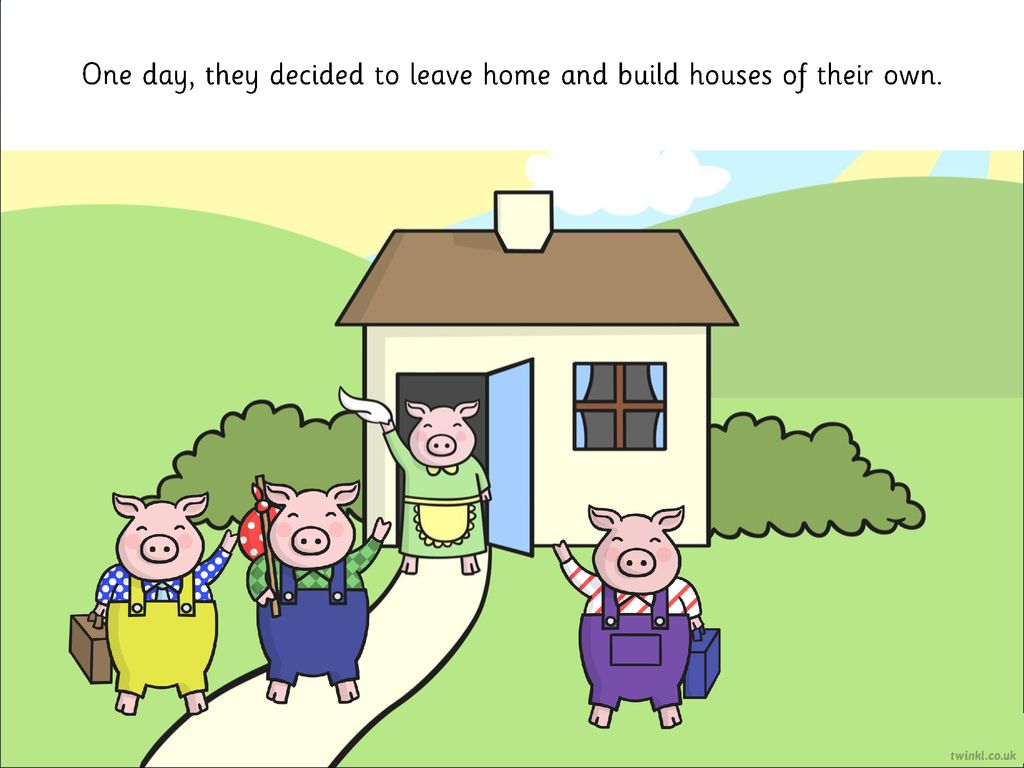
Three Little Pigs ~ Slide Show

I saw in their eyes something I was to see over and over in every part of the nation -- a burning desire to go, to move, to get under way, anyplace, away from any Here. They spoke quietly of how they wanted to go someday, to move about, free and unanchored, not toward something but away from something. I saw this look and heard this yearning everywhere in every state I visited. Nearly every American hungers to move. . . . nearly all Americans move away, or want to” (10, emphasis added; 99).

~by John Steinbeck
~from Travels With Charley: In Search of America, 1962

~ Oil Field Girls (1940) ~
Jerry Bywaters
(1906 - 1989)

"Impossible, now, to live your life
in a single place, to call it home.
"
Del Marie Rogers
(1936 - 2022)

Home-Free

There’s no rhyme for how high the corn should be*
in September, but I can see it, and I’m telling you

it’s up to my chest, maybe even my neck—
it’s hard to tell from the road—and it’s brown,

and judging by the sibilance when the wind
rubs the husks together, it must feel like paper.

I didn’t see myself living among husks. I didn’t
see myself here, not once I’d left my mother

and father’s house. Not Ohio, not round on the ends,
not high in the middle, not where some creeks

are called cricks. I always thought I would leave,
home-free, and go anywhere: land of silver

mesquite branches, land of dry riverbeds
with stones a horse could spark its hooves on.

Not here, not knee-high by July, not in the heart
of it all, not where some cricks are creeks:

Alum, Big Darby, Blacklick. I didn’t see myself
raising children here, raising as if they could

levitate if we focused our attention. I didn’t
see myself dying in my hometown, not a few

miles from where I was born, not surrounded
by my children, their feet planted on the ground.

I can see them. They’ll say they always knew
where to find me. They’ll say I was always here.


~by Maggie Smith
~from Good Bones, 2017

*Actually there IS a rhyme for this:
"The corn is as high / as an elephant's eye"

Last month I was comparing John Steinbeck with novelist Ann Patchett, so alike in their vision of a picture - perfect landscape. This month, I'm contrasting Steinbeck and poet Maggie Smith, so different in their views of leaving home or staying put. Steinbeck is convinced that searching far afield is the one true path, while Smith presents the magic charm of blooming where planted, "a few miles from where I was born."

For Steinbeck, the urge for new vistas is irresistible. His heart aches for the little neighbor boy who sees him getting ready to drive for weeks across the country, and begs: "take me with you." Steinbeck writes: "Unfortunately, I knew his longing. . . . He had the dream I've had all my life, and there is no cure." Or the young man he meets later on who reads The New Yorker and dreams of going there on his own one day: "'One likes to see for one's self,' he said. I swear he said it" (Travels With Charley, 10 - 11; 172)).

For Smith, on the other hand, a familiar circumference is ultimately a gift to her children:
" . . . They’ll say they always knew
where to find me. They’ll say I was always here
."

Remember, even Yeats (see blog header way up above) hoped for his daughter to be "Rooted in one dear perpetual place. . . . accustomed, ceremonious."

Is it, or is it not "supposed to be any way"? Is one life choice significantly better than or preferable to the other? Or is it 6 of one, 5 of the other -- as in, yes, there is a difference, but just not much, and not always clear which is which. I can't really imagine my life if my parents had abided perpetually close at hand, or if I had, or if Gerry had. The literary connecions suggest many options: staying forever, going away but returning, striking out on your own and learning something new, leaving and never looking back . . .

1. Shakespeare

ROMEO [upon learning of his banishment]:
"There is no world without Verona walls."

FRIAR LAWRENCE:
"Be patient, for the world is broad and wide."

2. Charlotte Bronte
" . . . my experience had been of [the world's] rules and systems; now I remembered that the real world was wide, and that a varied field of hopes and fears, of sensations and excitements, awaited those who had courage to go forth into its expanse, to seek real knowledge of life amidst its perils."(Jane Eyre, Chapter 10)
3. John Denver

" On the eve of his twentyfirst birthday
he set out on his own
He was thirty years and running
when he found his way back home
Riding a storm across the mountains
and an aching in his heart
Said he came to turn the pages
and to make a brand new start . . .

There was something in the city
that he said he couldn't breathe
And there was something in the country
that he said he couldn't leave
. . . "

4. Alan Parsons

"The traveler is always leaving town
He never has the time to turn around
And if the road he's taken isn't leading anywhere
He seems to be completely unaware . . .

The traveler awaits the morning tide
He doesn't know what's on the other side
But something deep inside of him
Keeps telling him to go
He hasn't found a reason to say no
. . . "

5. David Wagoner

" . . . not from the hustings or the barricades
Or the rickety stage . . .
But from another way out . . . Get out of town
."

6. Josephine Tey
"It was typical that Robert's ambition was to go back to the little country town and continue life as it was; while Kevin's was to alter everything that was alterable in the Law and to make as much noise as possible in the doing of it" (The Franchise Affair, 93)
7. Walt Whitman

Listen! I will be honest with you,
I do not offer the old smooth prizes, but offer rough new prizes,
These are the days that must happen to you:
You shall not heap up what is call’d riches,
You shall scatter with lavish hand all that you earn or achieve,
You but arrive at the city to which you were destin’d, you hardly settle yourself to satisfaction before you are
call’d by an irresistible call to depart,
You shall be treated to the ironical smiles and mockings of those who remain behind you,
What beckonings of love you receive you shall only answer with passionate kisses of parting,
You shall not allow the hold of those who spread their reach’d hands toward you
."
("Song of the Open Road” #11)

Next Fortnightly Post
Tuesday, May 28th
Previous Fortnightly ~ More Steinbeck

Between now and then, read
THE QUOTIDIAN KIT
my shorter, almost daily blog posts
www.dailykitticarriker.blogspot.com

Looking for a good book? Try
KITTI'S LIST
my running list of recent reading
www.kittislist.blogsppot.com

Friday, July 28, 2023

All that Glitters

GRADE SCHOOL SWEATER CLIP
ACCUSTOMED, CEREMONIOUS
Cat and Mouse

On the sheep-cropped summit, under hot sun,
The mouse crouched, staring out the chance
It dared not take.
Time and a world
Too old to alter, the five mile prospect—
Woods, villages, farms hummed its heat-heavy
Stupor of life.
Whether to two
Feet or four, how are prayers contracted!
Whether in God’s eye or the eye of a cat.


Ted Hughes
I no longer have my 1965 vintage cat and mouse sweater chain. But I remember it well and was able to track down a few photos on the internet. I must have worn it to school every day in 2nd grade, until the mouse's tail snapped in two. Even after that, I saved at the bottom of my trinket box for a long time, along with my broken Snow White Watch (3rd grade).

These two poems -- above by Ted Hughes, below by William Blake
-- align perfectly with the drama of the sweater guard. Look! There is the glittering "eye of a cat," pursuing the anxious mouse. And there is the "end of a golden string," enticing the cat in its perpetual conflict with the universe.
I give you the end of a golden string;
Only wind it into a ball,
It will lead you in at Heaven’s gate,
Built in Jerusalem’s wall.


William Blake

Poetic connections to gold abound;
here are a few glittering examples:


Robert Frost:
"nothing gold can stay"

Barbara Kunz Loots:
"watch the gold illusion drift away"

Joseph Parry:
"Make new friends,
but keep the old;
Those are silver, these are gold."

Johnny Marks:
"Silver and gold . . .
How do you measure its worth?
Just by the pleasure
It gives here on Earth."

Shakespeare:
"all that
glisters / glistens / glitters
is not gold"

Spandau Ballet:
"Gold!
Always believe in your soul
You've got the power to know
You're indestructible
Always believe in, 'cause you are
Gold . . ."

Yeats:
" . . . pluck till time and times are done,
The silver apples of the moon,
The golden apples of the sun."

The Cloths of Heaven
Had I the heavens' embroidered cloths,
Enwrought with golden and silver light,
The blue and the dim and the dark cloths
Of night and light and the half light,
I would spread the cloths under your feet:
But I, being poor, have only my dreams;
I have spread my dreams under your feet;
Tread softly because you tread on my dreams.
Previously in this series of jewelry inspired posts:
Re: Jewel, Rainbow, Splendor
Heirloom Jewelry
Diamond Studs Are Forever
Choose Dearests, Choose
Where is Fancy Bred
AND MORE


Also in my jewelry box:
Three Sisters' Pin & Pendant
that my sisters and I wear whenever we're together

Next Fortnightly Post
Saturday, October 14th


Between now and then, read
THE QUOTIDIAN KIT
my shorter, almost daily blog posts
www.dailykitticarriker.blogspot.com

Looking for a good book? Try
KITTI'S LIST
my running list of recent reading
www.kittislist.blogsppot.com

Sunday, April 14, 2024

To the Literary Battle Fronts

INSTILLING DIGNITY, CHANGING STORIES
~ ACCUSTOMED, CEREMONIOUS ~
Mural by
The Graffiti Girls Kenya
Journalist Elizabeth Okwach: "In Kenya, a group of fearless women are finding ways to express themselves by painting graffiti. In the process, these women are challenging stereotypes by visualizing civic issues that are impacting their community.

"Working in Kenya’s capital Nairobi — and major surrounding cities — Graffiti Girls Kenya are painting murals that are gracing the walls of creative hubs and community centers. Even though the murals are bright with color, the themes of these works cover a wide range of societal ills."


Graffiti Girls "sees public art as a crucial venue to address"
the problem of Gender Based Violence.

Artist Nelly Bradbury: “Our messaging through graffiti is bold and clear. When people are passing by they are able to see it and even guide them . . . I believe that public art is changing the social conditions of our community and instilling a deep sense of dignity. It is also changing peoples’ stories that have been ignored or overlooked.
~from OkayAfrica, June 2, 2022

While the artists' collective raises awareness visually, the AMKA writers' collective takes a verbal approach. Director Lydia W. Gaitirira expresss concern that while "written works form a good basis for analyzing perceptions on important social, political, economic and other issues . . . a lot of the creative literature available to young women . . . is designed primarily to entertain . . . [and] often ignores the pertinent issues."

The Fresh Paint literature project offers a corrective to fill that gap. Through prose and poetry, numerous serious writers are telling their stories of personal and political revolution from "the literary battle fronts."

Featured recently on
Kitti's Book List and The Quotidian Kit
~ Volume 1 available on amazon ~
~ Title story available on wordpress ~


This post will focus on a few more selections
from the Fresh Paint collections.
In the following poems, a trio of poets
raise their voices and our consciousness.

1.
The first is a saga of birth, suffering, and as yet unrealized potential, somewhat reminiscent of Walt Whitman's Out of the Cradle Endlessly Rocking, except -- instead of bird, boy, and sea -- the dominant motifs are mother, child, and earth (see also Yeats's "The Second Coming"). This is a long poem; here are the first five stanzas:

The Day the Cradle Gave Birth
~ by Kingwa Kamenchu (in volume 1, 108 - 112)

I know the story of how
She had once been
The cradle of all mankind,
The genesis of all living and breathing,
The birth ground of all empire.
But then in time,
Things had fallen apart

But I've been watching and waiting
And reading the signs
And they all tell me
That the cradle is once again pregnant
Heavy.
Ready to deliver
Any time soon

I see it in the way
Those children inside her stir,
Move, foment, and seethe,
With the pain of being inside
In that watery dark for far too long
A watery dark they have been stuck into
Pegged in, enclosed around, hemmed into,
Trapped down in, shoved upon, condemned to,
Misled, misinformed, and
Hoodwinked is their destiny
For far too long.

They know they must get out now,
Get away from the suffocation and bleakness inside.
These days, you see,
They have their learning; they have seen other worlds
Sniffed the tangy possibility of new vistas
They know who they are
What they want
And they will take no less

I see it in the way
Those children kick,
Jerk about, lash out, and thrust against,
Refuse, demur, dissent
To the condemnation; hit against the inner
enemies as well,
Refuse to be stifled,
After all these years
After numerous struggles
From the war trenches to the academies,
To the literary battle fronts,
They have never given up . . .


The sixth stanza describes Mother Africa's 50 - year pregnancy: "abnormal, surreal, absurd." While the other six continents "Dance, sashay and flourish" and "rule the world," she is restricted by her so - called "condition." In the seventh and eighth stanzas, "Her body has been one big war zone . . . Such a torturous existence" of labor pains, birth pangs, loss of blood.

Then for a brief moment, seven short stanzas, the poet is graced with a vision of hope. Africa has delivered the "home grown . . . fruit of her womb":


Fat, gurgling, cherub-cheeked babies,
Round and luscious, black skins satedly gleaming.
Long gone were the pathetic skin and bone wasted tots
Staring out of wide vacant eyes, flies nibbling at their corners
BBC, CNN, long packd up and trotted off to the
wildebeest great migration
in search of the new exotic; Real African picture. . . .

But I blinked
And when I opened my eyes,
She was still pregnant
Flailing her arms and legs
Rolling her neck from side to side
Moaning in pain and anguish
Like before

And it made me sit and wonder,
What will it take?
For this glorious, blessed cradle,
To give birth once again?


2.
The second poem, like the first, is rich in literary allusion and geography -- the Nile, the streets of Harlem, the "belly of the Sahara . . . a thousand lands." Jallow writes with hope that the world is wide and scorn may be supplanted by song. However, many wrongs remain to redress:

From Shame and Fantasy I Rise
~ by Maimouna Jallow (in Volume 2, 26 - 27)

I too, I dance and I rise
With diamonds at the meeting between my thighs,
Reclaimed the names that you gave me,
And found in them some things that might surprise.

Too many details remained buried under the cloak of the past,
Even if slavery never did lay its hands on my brown skin.
Shame and fantasy reduced my tribe to just half of a caste
Only the walls murmuring whispers of the original sin.

You called me Zero Point Five,
Mathematically drawing a decimal into my existence,
As though in those numbers did not lie
Thousands of years of resistance.

You called me IN-FER-TILE,
Supported by false tales of scientific evolution.
But I flow through man-made boundaries, a child of the NILE,
And my name is written in stone, engraved in the memory of revolution.

Now, just like then, Mule-atta dances off your tongue,
Insult camouflaged by exoticism,
An eroticism splattered on big screens uncensored.
Darwinism dons past colonialism and has just met commercialism.

But under the glow of Harlem streetlights, I too was reborn.
Invoked my sisters of the cowrie crowns,
We rose and danced away your scorn.
Cleaned away the bruises and beneath found mud brown.

And from the belly of the Sahara, we prayed to Orishas.
Baptised ourselves: half of a yellow sun, half of a full moon.
Journeyed a thousand lands learning the wisdom of philosophers
And found that God put a prayer and song in our mouths too.


3.
The third poem personifies and addresses Nairobi directly. The poet calls on the city to account for an unfair history and provide for an equitable future. All three poems share themes of revolution and rebirth. All three ask the reader to question the power of location and the significance of placenames. What will it take? Are you that place?

Are you that place?
~ by Nebila Abdulmelik (in Volume 2, 7)

Are you that concrete jungle
Crumbling under the weight of
Manoeuvring, manipulative matatus
Where passengers are shuka'd at whim?
Are you where darkness whispers sweet lullabies
Or where lights play dirty tricks
Where money is mobile
And glass ceilings tower as high as KICC?
Where freedom is plastered on bus stops
And injustice deeply rooted
Into territorial boundaries
Where few attest their tribe is indeed Kenyan
Where Tusker runs like maji
Where unga is revolutionised
And revolutions are most definitely not televised
Where radios relentlessly relay well kept secrets
Where the rain commands the city
And payday drives traffic
Where the likes of Kibera & Sinai make way
For the likes of Karen & Spring Valley?
Are you the capital of thieves and robbers
Or a megapolis of IT geeks, business gurus and self-made men
Where every pocket is packed with dreams
But not every dream packs pockets
Tell me, Nairobi, are you that place?
Tumutumu Mission Station,
Kenya, ca.1910-1930
,
about 2 hours north of Nairobi

***************

Tumutumu Presbytery,
a few decades later.
My friend Mumbi says:
"This is not what it looked like
when I was baptized there at age 12."

Next Fortnightly Post
Sunday, April 28th

Between now and then, read
THE QUOTIDIAN KIT
my shorter, almost daily blog posts
www.dailykitticarriker.blogspot.com

Looking for a good book? Try
KITTI'S LIST
my running list of recent reading
www.kittislist.blogsppot.com