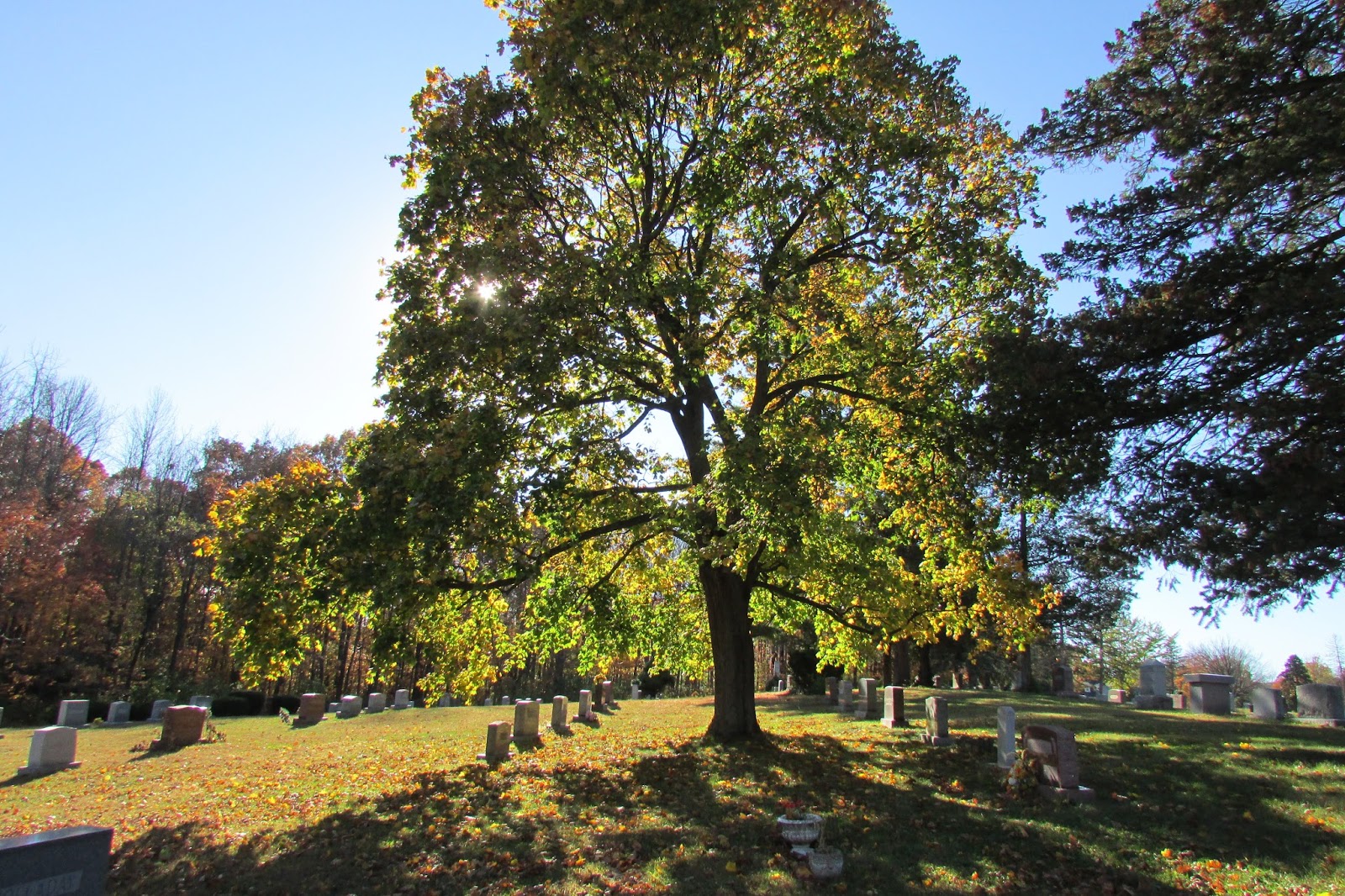
"One ought, every day at least, to hear a little song, read a good poem, see a fine picture
and, if possible, speak a few reasonable words." ~Goethe

~ also, if possible, to dwell in "a house where all's accustomed, ceremonious." ~Yeats

Showing posts with label Leo Tolstoy. Show all posts

Tuesday, May 28, 2019

From the Desk of Ernest Hemingway: "But never feel as good as while writing."

FINCA VIGIA: HEMINGWAY'S CUBAN VILLA
WHERE ALL'S ACCUSTOMED, CEREMONIOUS
"And therefore never send to know for whom the bell tolls;
It tolls for thee
."
~ John Donne

***************

Finca Vigía
pronounced feen-ca vee-hee-a
meaning Lookout Farm
now a museum
once the home of Ernest Hemingway (1899 - 1961)
where he lived off and on between 1939 - 1960
writing segments of For Whom the Bell Tolls (1939 - 40)
and The Old Man and the Sea (1951)
in rural Havana, Cuba
about 15 miles from the City Center

Over the decades, there has been serious concern about the condition of Finca Vigía and the many priceless books and manuscripts housed there. Thanks to joint efforts between Cuba and the United States, the estate is now a living history museum, carefully preserved down to the finest detail. Each room has become a time capsule, seemingly undisturbed since Hemingway's last day there, back in July of 1960. Gerry and I were fortunate to see the Hemingway house / musuem last month, when we were docked in Havana for twenty - four hours as part of a Norweigian Cruise -- before the recently re - instated, travel restrictions severely and unnecessarily curtailed this international opportunity for so many curious Americans.

Still awaiting renovation & water, the elegant pool
at Finca Vigía, on a beautiful spring day:

One room just for writing:

Another just for reading:

Where Hemingway Sat!

Some Reading & Writing
Advice from Hemingway
Books should be about the people you know, that you love and hate, not about the people you study up about. If you write them truly they will have all the economic implications a book can hold.

In the meantime, since it is Christmas, if you want to read a book by a man who knows exactly what he is writing about and has written it marvelously well, read Appointment in Samarra by John O’Hara.

Then when you have more time read another book called War and Peace by Tolstoi and see how you will have to skip the big Political Thought passages, that he undoubtedly thought were the best things in the book when he wrote it, because they are no longer either true or important, if they ever were more than topical, and see how true and lasting and important the people and the action are. Do not let them deceive you about what a book should be because of what is in the fashion now. All good books are alike in that they are truer than if they had really happened and after you are finished reading one you will feel that all that happened to you and afterwards it all belongs to you; the good and the bad, the ecstasy, the remorse, and sorrow, the people and the places and how the weather was. If you can get so that you can give that to people, then you are a writer.


from "Old Newsman Writes: A Letter from Cuba"
in Esquire (December 1934)


***************

The individual, the great artist when he comes, uses everything that has been discovered or known about his art up to that point, being able to accept or reject in a time so short it seems that the knowledge was born with him, rather than that he takes instantly what it takes the ordinary man a lifetime to know, and then the great artist goes beyond what has been done or known and makes something of his own.

. . . all stories, if continued far enough, end in death, and . . . no true-story teller . . . would keep that from you.


from Chapter 9 of Death in the Afternoon (1932)

***************

I was always embarrassed by the words sacred, glorious and sacrifice and the expression in vain. We had heard them, sometimes standing in the rain almost out of earshot, so that only the shouted words came through, and had read them, on proclamations that were slapped up by billposters over other proclamations, now for a long time, and I had seen nothing sacred, and the things that were glorious had no glory and the sacrifices were like the stockyards at Chicago if nothing was done with the meat except to bury it.
from Chapter 11 of A Farewell to Arms (1929)

***************

Click for more Hemingway Quotes
For example:

"My attitude toward punctuation is that
it ought to be as conventional as possible. . . .
You ought to be able to show that you can do it
a good deal better than anyone else with the regular tools
before you have a license to bring in your own improvements."

&

"Do you suffer when you write? I don't at all.
Suffer like a bastard when don't write, or just before,
and feel empty and f----d out afterwards.
But never feel as good as while writing."

SEE YOU IN TWO WEEKS ON MY
Next Fortnightly Post
Friday, June 14th

Between now and then, read
THE QUOTIDIAN KIT
my shorter, almost daily blog posts
www.dailykitticarriker.blogspot.com

Looking for a good book? Try
KITTI'S LIST
my running list of recent reading
www.kittislist.blogspot.com

Saturday, November 28, 2015

OMG!

WHERE ALL'S ACCUSTOMED, CEREMONIOUS
Genuine religion is not about speculating about God or the soul
or about what happened in the past or will happen in the future;
it cares only about one thing — finding out
exactly what should or should not be done in this lifetime.

*************

It is terrible when people do not know God,
but it is worse when people identify as God what is not God.


Leo Tolstoy
Path of Life or
Calendar of Wisdom, 1909
as translated by M. Cote, 2002


Stretching from All Saints' Day on the 1st to St. Andrew's Day on the 30th, November is a month for honoring all deserving Saints and Souls. It begins and ends with a Holy Day, including some good ones in between, such as Martinmas. It's a month for showing respect to the Living and the Dead, which brings me to the ever - popular topic of taking the name of the Lord in vain, as in The Ten Commandments: "Thou shalt not take the name of the LORD thy God in vain; for the LORD will not hold him guiltless that taketh his name in vain" (Exodus 20:7 KJV).

It's true that the endless chorus of "oh my god" that passes for expression and dialogue in daily conversation grows tiresome very quickly, not so much because it's disrespectful but because it indicates such a limited vocabulary and lack of imagination -- similar to adults who chew gum visibly in public -- ewww, puh - lease, gag me! "OMG" is no better, yet somehow I find it less annoying -- sort of the way that changing "Kentucky Fried Chicken" to "KFC" made the meal seem a little less greasy.

Is the third commandment merely a rule against saying,"Oh my God" or does it suggest something more substantial than that? In answer to this question, it is helpful to consider that the Bible also says "strive not about words to no profit" 2 Timothy 2:14 (NRSV). So you don't care for your neighbor's choice of slang? Well, here's a simple solution: just turn the other ear.

I've long been inspired by Frederick's comment in the Woody Allen film Hannah and her Sisters:

"If Jesus came back and saw what's going on in his name,
he'd never stop throwing up."

I appreciate this understanding of not taking God's name in vain. I never did believe -- as I was taught in childhood -- that it meant not saying "Gee whiz" or "Goddamnitbullshittohell." What it really means is not ascribing your beliefs to God and doing your own will in God's name.

Contemporary American song writer Ben Folds suggests the same idea in his his song Jesusland:
"Town to town
broadcast to each house, they drop your name
but no one knows your face
Billboards quoting things you'd never say
you hang your head and pray
for Jesusland . . .
crosses flying high above the malls . . .
"


Additional thoughts
from a couple of thoughtful Episcopalians:

Ambassador / Senator John Danforth (who, believe it or not, was the speaker at my college graduation): "Moderate Christians are less certain about when and how our beliefs can be translated into statutory form, not because of a lack of faith in God but because of a healthy acknowledgement of the limitations of human beings. Like conservative Christians, we attend church, read the Bible and say our prayers.

"But for us, the only absolute standard of behavior is the commandment to love our neighbors as ourselves. Repeatedly in the Gospels, we find that the Love Commandment takes precedence when it conflicts with laws. We struggle to follow that commandment as we face the realities of everyday living, and we do not agree that our responsibility to live as Christians can be codified by legislators.

"When, on television, we see a person in a persistent vegetative state, one who will never recover, we believe that allowing the natural and merciful end to her ordeal is more loving than imposing government power to keep her hooked up to a feeding tube.

"When we see an opportunity to save our neighbors' lives through stem cell research, we believe that it is our duty to pursue that research, and to oppose legislation that would impede us from doing so.

"We think that efforts to haul references of God into the public square, into schools and courthouses, are far more apt to divide Americans than to advance faith.

"Following a Lord who reached out in compassion to all human beings, we oppose amending the Constitution in a way that would humiliate homosexuals.

"For us, living the Love Commandment may be at odds with efforts to encapsulate Christianity in a political agenda. We strongly support the separation of church and state, both because that principle is essential to holding together a diverse country, and because the policies of the state always fall short of the demands of faith. Aware that even our most passionate ventures into politics are efforts to carry the treasure of religion in the earthen vessel of government, we proceed in a spirit of humility . . ."


~ from the essay Onward, Moderate Christian Soldiers ~
The New York Times, 17 June 2005

**************

Bishop John Shelby Spong: “God is not a Christian, God is not a Jew, or a Muslim, or a Hindu, or a Buddhist. All of those are human systems which human beings have created to try to help us walk into the mystery of God. I honor my tradition, I walk through my tradition, but I don't think my tradition defines God, I think it only points me to God.”

**************

And from an English bishop
within the Eastern Orthodox Church

Kallistos Ware: “We see that it is not the task of Christianity to provide easy answers to every question, but to make us progressively aware of a mystery. God is not so much the object of our knowledge as the cause of our wonder.”

~ from his book The Orthodox Way ~


SEE YOU IN TWO WEEKS FOR MY
Next Fortnightly Post
Monday, December 14th

Between now and then, read
THE QUOTIDIAN KIT
my shorter, almost daily blog posts
www.dailykitticarriker.blogspot.com


Looking for a good book? Try
KITTI'S LIST
my running list of recent reading
www.kittislist.blogspot.com